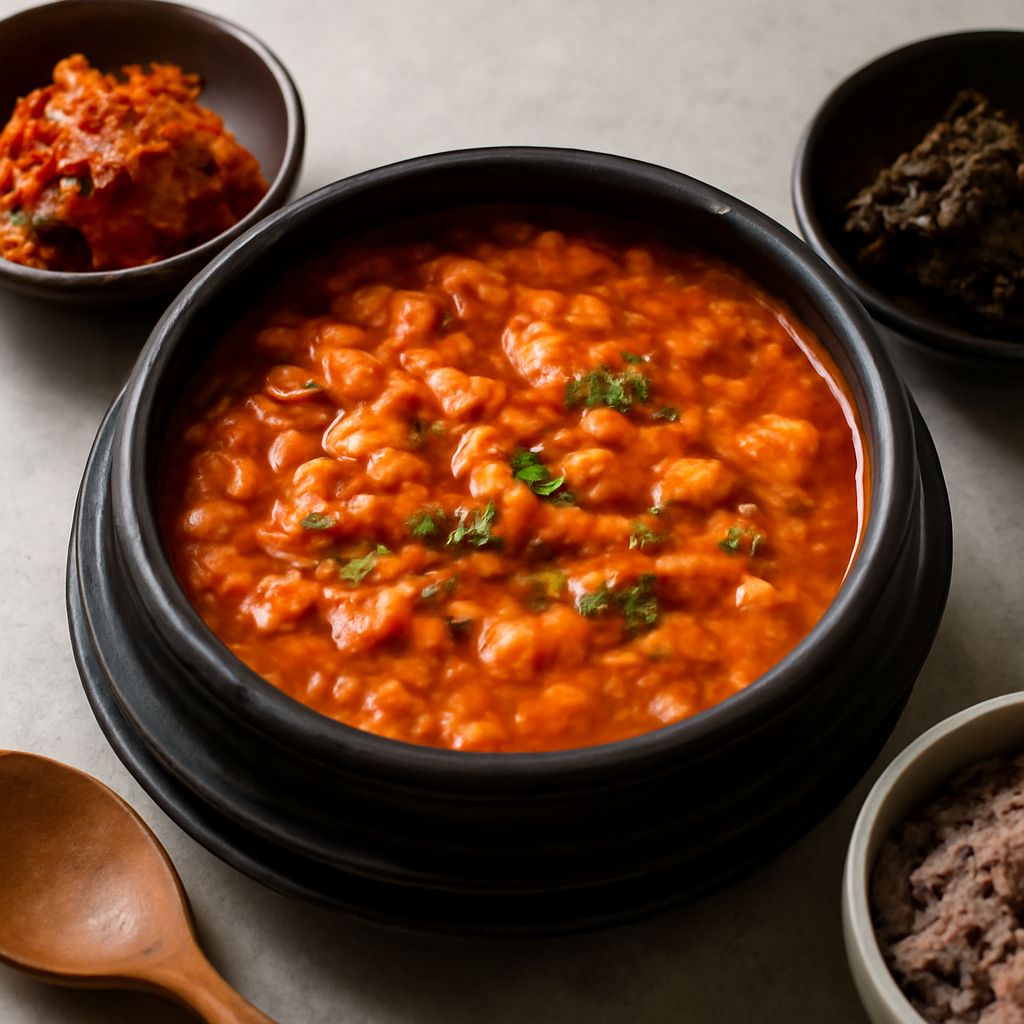
Korean seafood soup is one of the most vibrant and boldly flavored soups in East Asian cuisine. Loaded with fresh shellfish, silken tofu, and a deeply seasoned broth built on gochujang or gochugaru, it delivers heat, umami, and oceanic freshness in every spoonful. This is genuine comfort food for anyone who loves spice and seafood in the same bowl.
Known as haemul tang in Korean, this spicy seafood soup belongs to a tradition of bold, fire-red broths that warm you from the inside out. The essential flavors come from a fermented paste base — a style of spicy korean sauce that gives the broth its characteristic depth. Alongside Chinese-influenced asian seafood soup traditions, Korean seafood soups stand out for their intensity and warmth. Even a milder relative like spicy squash soup shares similar flavor-building principles.
Key Ingredients
The Seafood
Classic Korean seafood soup uses a combination of shellfish: clams, mussels, shrimp, squid, and sometimes crab or octopus. Freshness is paramount — the seafood should smell clean and oceanic, not fishy. Using a mix of textures and types creates a more complex, satisfying spicy seafood soup. Add firm tofu for protein and to moderate the heat.
The Broth Base
The broth starts with anchovy stock (made from dried Korean anchovies and kombu) or a simple seafood stock. The spicy korean sauce element comes from gochujang (fermented chili paste), gochugaru (Korean chili flakes), garlic, ginger, soy sauce, and fish sauce. This combination creates an intensely savory, spicy, and slightly sweet broth that defines genuine Korean seafood soup.
How to Make Korean Seafood Soup
Start by making anchovy stock: simmer 10 dried anchovies and a sheet of kombu in 6 cups of water for 15 minutes. Strain. In a pot, sauté garlic, ginger, and a tablespoon of gochujang in sesame oil for 2 minutes. Add the strained stock, 1 tablespoon gochugaru, 1 tablespoon soy sauce, and 1 teaspoon fish sauce. Bring to a boil. Add shellfish in order of cooking time: clams first (5 minutes), then mussels (3 minutes), then shrimp and squid (2 minutes). Add tofu cubes and sliced zucchini. Simmer until everything is cooked through. Serve immediately with steamed rice.
Spicy Korean Sauce: The Flavor Foundation
The spicy korean sauce base — gochujang and gochugaru combined with fermented elements — is what sets this soup apart from other asian seafood soup styles. Gochujang adds deep, fermented sweetness and heat. Gochugaru gives clean, bright chile heat with a fruity edge. Together they create a broth with remarkable complexity. If you find full-heat Korean seafood soup too intense, start with half the gochugaru and add more to taste.
Variations
For a spicy squash soup variation, add cubed Korean zucchini or butternut squash to the base and reduce the seafood component. This creates a heartier, more vegetable-forward version of the spicy seafood soup. An asian seafood soup approach using this same broth but replacing gochujang with white miso and reducing the heat produces a gentler, umami-rich variation. Both respect the spirit of the original Korean seafood soup.
Bottom Line
Korean seafood soup is a bold, spicy, deeply satisfying meal that is more accessible to make at home than most people realize. The key is building the spicy korean sauce base carefully and using the freshest seafood you can find. Once you make this spicy seafood soup, you will understand why it is one of Korea’s most beloved dishes.