A venison marinade recipe solves two problems at once: it tenderizes the meat and tempers the strong gamey flavor that puts some people off wild game in the first place. Deer marinade works through acid, oil, and aromatics that break down muscle fibers and carry seasoning deep into the cut. Wild game marinade has to work harder than a beef marinade because venison is leaner and the flavor is more pronounced. Knowing how to build a good blend makes the difference between a meal that converts skeptics and one that confirms their doubts.
This guide covers venison marinades for different cuts and cooking methods, including options for a deer roast marinade that handles longer cooking times. Whether you are working with backstrap, shoulder, or a whole roast, the right acid-to-oil ratio and timing will get you there.
Why Venison Needs Marinating
Venison has almost no intramuscular fat. That leanness means the meat dries out quickly under heat and can taste dry and livery without proper preparation. Acidic ingredients like red wine, buttermilk, or apple cider vinegar begin breaking down protein structures on the surface, allowing seasonings to penetrate further. Oil carries fat-soluble flavors and keeps the exterior from drying out during cooking. Together, they give venison marinades their function.
Core Ingredients for a Wild Game Marinade
Every effective wild game marinade needs an acid, an oil, and aromatics. Good acid choices include red wine, balsamic vinegar, Worcestershire sauce, or citrus juice. Olive oil is the most common fat. Aromatics include garlic, fresh rosemary, thyme, juniper berries, and black pepper. Juniper berries are the one ingredient that specifically complements wild game flavor in a way that other spices do not. Crush them slightly before adding to release their oils.
Avoid using too much acid or marinating for too long. Over-acidic deer marinade turns the outer layers of the meat mushy and gray before cooking even starts. For thin cuts like backstrap medallions, two to four hours is enough. For a thick deer roast marinade, eight to twelve hours in the refrigerator is appropriate.
Simple Venison Marinade Recipe for Steaks
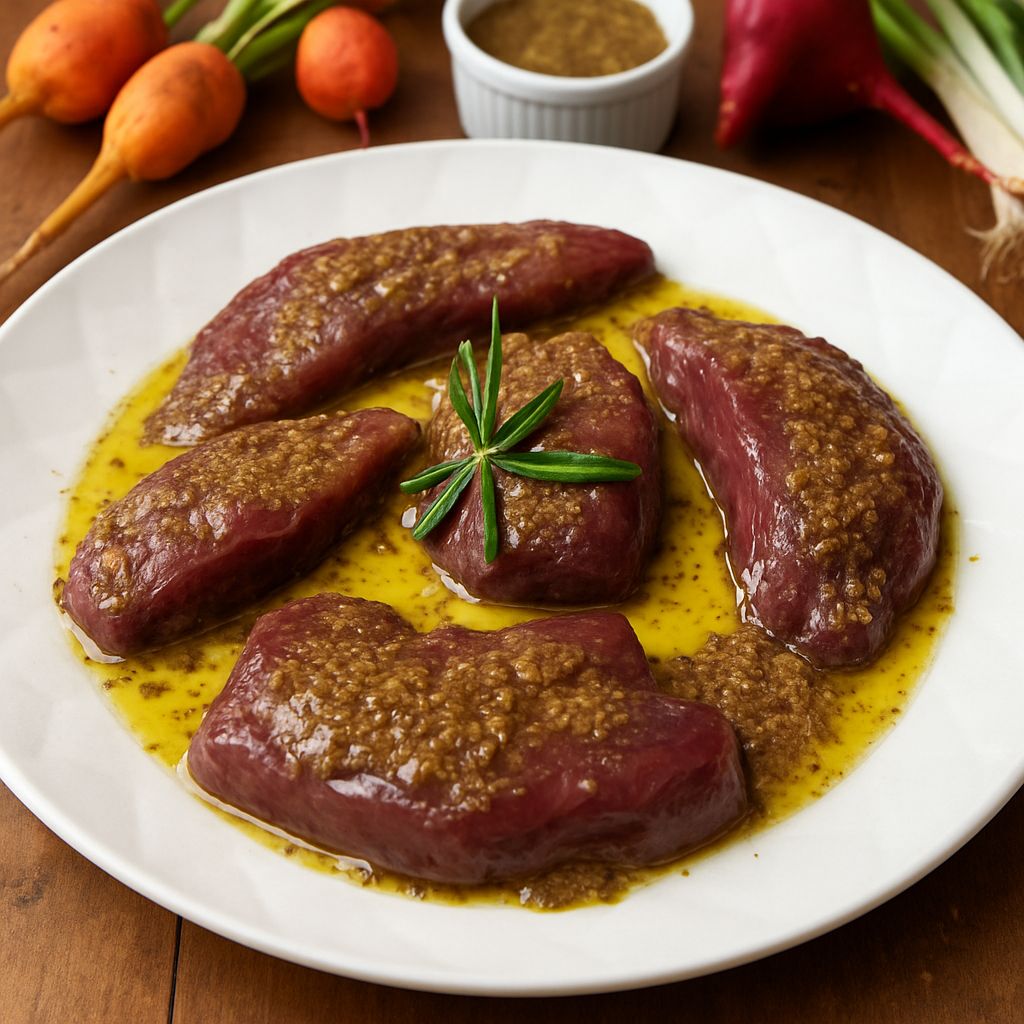
Combine half a cup of red wine, a quarter cup of olive oil, three crushed garlic cloves, a tablespoon of Worcestershire sauce, a teaspoon each of rosemary and thyme, six lightly crushed juniper berries, and a teaspoon of black pepper. Mix and pour over steaks in a zip-lock bag or shallow dish. Marinate refrigerated for four hours. Pat the meat dry before cooking to get a proper sear rather than steam. This venison marinade recipe works well on backstrap and tenderloin.
Deer Roast Marinade for Slow Cooking
A deer roast marinade needs more body than a steak marinade. Add soy sauce and a tablespoon of tomato paste to the base mixture above. The soy sauce adds umami and additional salt that penetrates the larger muscle mass over the longer marinating period. Tomato paste provides a slight sweetness and acidity that does not overwhelm the venison. Marinate overnight, then sear the roast before braising in stock and the strained marinade.
Buttermilk Wild Game Marinade
Buttermilk is a traditional Southern method for taming the gaminess of wild game marinade preparations. The lactic acid is gentler than wine or vinegar, making it ideal for longer soaks of up to 24 hours. It works particularly well for venison that will be fried or used in stews. Season the buttermilk with hot sauce, garlic, and onion powder. Rinse and dry the meat thoroughly before cooking to remove the dairy coating.
Timing and Food Safety
Always marinate venison in the refrigerator, never at room temperature. Do not reuse marinade that has been in contact with raw meat as a sauce without boiling it thoroughly first. Discard any leftover marinade that was not reserved before adding the meat. These steps prevent cross-contamination and keep the marinade safe to use throughout the process.