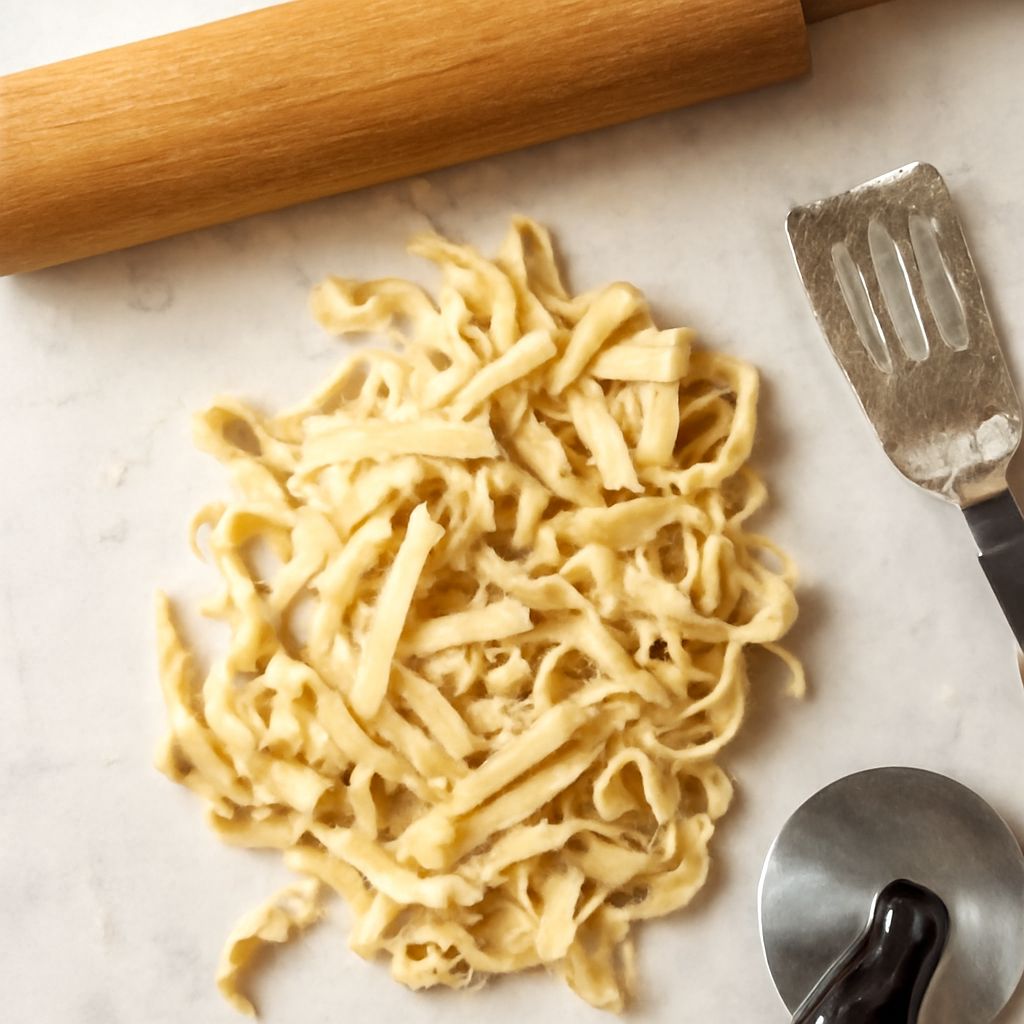
Start with flour, eggs, and a fork, and you are on your way to tender ribbons for soup or a buttery side dish. Making egg noodles at home is a matter of bringing those few ingredients together, kneading a firm dough, and rolling it thin enough to cook evenly.
The ingredients for egg noodles are familiar, and the texture of the dough tells you when to add a little water or flour. A short rest makes rolling easier; after that, cut the sheet to the width you like and give the noodles a quick boil.
Egg Noodle Ingredients and a Simple Method
This simple egg noodle recipe makes about four side-dish servings. Allow about 25 minutes for mixing and kneading, 30 minutes for resting, and 20 minutes for rolling, cutting, and cooking. You need a mixing bowl, a fork, a rolling pin, a knife or pizza wheel, and a large pot.
Gather these egg noodle ingredients:
- 2 1/3 cups all-purpose flour (about 280 grams), plus a little more for dusting
- 1/2 teaspoon fine salt, plus salt for the cooking water
- 3 large eggs
- 1 to 2 teaspoons water, only if needed
For this simple recipe for egg noodles, spoon and level the flour or weigh it. When making egg noodles, judge the mixed ingredients by feel before adding water. Kneaded dough should be firm and smooth.
- Mix. Whisk the dry ingredients for egg noodles in a large bowl. Make a well in the center and crack in the eggs. Beat the eggs with a fork, gradually drawing in flour from the sides. When the mixture becomes too stiff for the fork, bring it together with your hands.
- Adjust. Press the shaggy mixture together. If dry flour will not incorporate, add water a teaspoon at a time. If the dough clings heavily to your hands, dust it lightly with flour. Give each addition time to work in before adding more.
- Knead. Turn the dough onto a lightly floured counter. Push it away with the heel of your hand, fold it back, turn it, and repeat for 8 to 10 minutes. It should become smooth and firm, with a little spring when pressed.
- Rest. Wrap the dough snugly or cover it with an overturned bowl. Leave it at room temperature for 30 minutes. The dough will relax and become easier to roll.
- Roll and cut. Divide the dough into four pieces, keeping the unused pieces covered. Roll each on a lightly floured surface to about 1/16 inch thick. Dust the sheet lightly, fold it loosely into thirds, and cut across it into strips about 1/4 inch wide. Unfold and separate the noodles.
- Cook. Bring a large pot of salted water to a rolling boil. Add the noodles, stir to separate, and begin tasting after 2 minutes. Thin fresh noodles generally take 2 to 4 minutes; thicker ones need longer. Drain when tender throughout with a pleasant chew, then serve promptly.
Bring the Dough Together
Learning how to make egg noodles begins with a shaggy, uneven mixture. At first, it may look as though there is too much flour. Press the damp pieces together and scrape the bowl before adding water. These egg noodle dough ingredients need a little time and pressure to combine; a few dry crumbs at the start are perfectly ordinary.
The ingredients in egg noodle dough each have a job. Among the ingredients for this egg noodle dough, flour provides structure, eggs supply richness, and salt seasons it. The dough is intentionally firmer than bread dough. Add flour to smearing dough; add a few drops of water if it breaks into dry fragments.
When you make noodles with eggs, add adjustments sparingly. Wet your fingertips and work the moisture through a dry patch, or sprinkle a small amount of flour over a sticky one. Knead for a minute before deciding whether to add more. Large additions make it easy to swing from one extreme to the other.
Knead, Then Give the Dough a Rest
Knowing how to make egg noodles includes recognizing the change under your hands. A rough ball gradually becomes smoother as you fold and press it. After several minutes, it should hold together without leaving a heavy paste on the counter. Press a finger into the surface: it should feel firm but yield slightly, with the indentation slowly easing back.
Kneading develops gluten, the network that gives noodles their chew. Use steady pressure, turning the dough frequently. If it is difficult to push, flatten it with your palm, fold it, and continue.
Resting is just as practical. When you prepare egg noodles from scratch, a covered rest gives the flour time to hydrate and lets the dough relax. When shaping egg noodles from scratch, a kneaded ball may spring back; after 30 minutes it should stretch more willingly. Keep it covered so the surface does not dry into a skin. If it still resists, cover it for another 10 minutes and try again.
Roll Thin, Cut Evenly
You can see how to make egg noodles without special equipment once the rested dough is divided into manageable pieces. Flatten one piece with your palm, then roll from the center outward. Turn the dough a quarter turn between passes and dust underneath only when it begins to stick. Aim for an even sheet about 1/16 inch thick: thin enough that you can just see the shadow of your hand through it.
When making egg noodles at home, even thickness matters more than a perfect rectangle. A thick patch takes longer to cook, while a thin edge can become soft first. If the sheet contracts, let it rest covered for a few minutes rather than pressing harder. Keep the other portions covered as you work so they stay supple.
For an easy batch of homemade egg noodles, a light dusting keeps the folded layers separate. Cut broad ribbons for a hearty bowl of chicken and noodles or narrower strips for a lighter soup. Unfold them immediately, shake off excess flour, and spread them loosely on a lightly floured tray. When making egg noodles by hand, pull stuck strips apart before they reach the pot.
This egg noodle pasta recipe also works with a pasta machine. To make fresh pasta noodles with eggs, pass a flattened portion through the widest setting, fold and repeat until smooth, then narrow the setting gradually. Stop when the sheet is thin and even, and cut by hand or with the machine attachment. Keep unused portions covered throughout.
Cook Fresh Noodles Until Tender
Once you know how to make egg noodles, the final test happens in the pot. Use plenty of boiling, salted water so the ribbons can move freely. Stir gently as soon as they go in and again as the water returns to a boil. Crowding the pot encourages clumping, so cook in batches if necessary.
When you make egg noodles at home, cooking time depends on thickness. Lift out a strand after about 2 minutes, let it cool briefly, and taste it. The center should be cooked through and tender, with a slight chew rather than a raw, floury core. Give thicker strips another minute and test again. Drain as soon as they are ready; they continue to soften in a hot sauce or soup.
For easy homemade egg noodles, toss the drained ribbons with butter and black pepper, adding a splash of the cooking water to loosen them. Parsley or a little grated cheese can finish the dish. For soup, simmer the strips in broth; their flour may thicken it slightly. Add extra broth as needed and cook until the noodles are tender throughout.
Plan Ahead and Keep Them Fresh
To prepare homemade egg noodles easily for later, spread the freshly cut strips on a lightly floured tray, cover, and refrigerate promptly at 40°F or below. Cook within 24 hours. For longer storage, freeze the separated strips on the tray, then transfer them to a freezer-safe container. Cook from frozen, allowing extra time and tasting for doneness. Do not rely on a brief air-dry to make egg-containing noodles shelf-stable.
Keep the total time the raw dough and noodles spend at room temperature under two hours, or one hour above 90°F. Wash your hands, counter, and equipment after handling raw egg and flour. If you refrigerate the dough before rolling, let it stand briefly until pliable, counting that time toward the room-temperature limit.
A simple homemade egg noodle recipe can produce different shapes. Wide strips suit braised meat, while thin ribbons settle into broth. If uncertain about thickness, cook a few test strands and adjust the remaining sheet.
When the Dough Needs Help
When learning how to make egg noodles, feel is your guide. If the dough sticks to the counter in wet smears, knead in a light dusting of flour. If it crumbles and refuses to form a ball, work in water a teaspoon at a time. When making egg noodles, a sheet that springs back needs a covered rest; one that tears at the edges may need a little more moisture kneaded in. Give each correction a moment to work, then roll again.