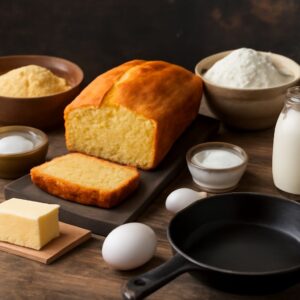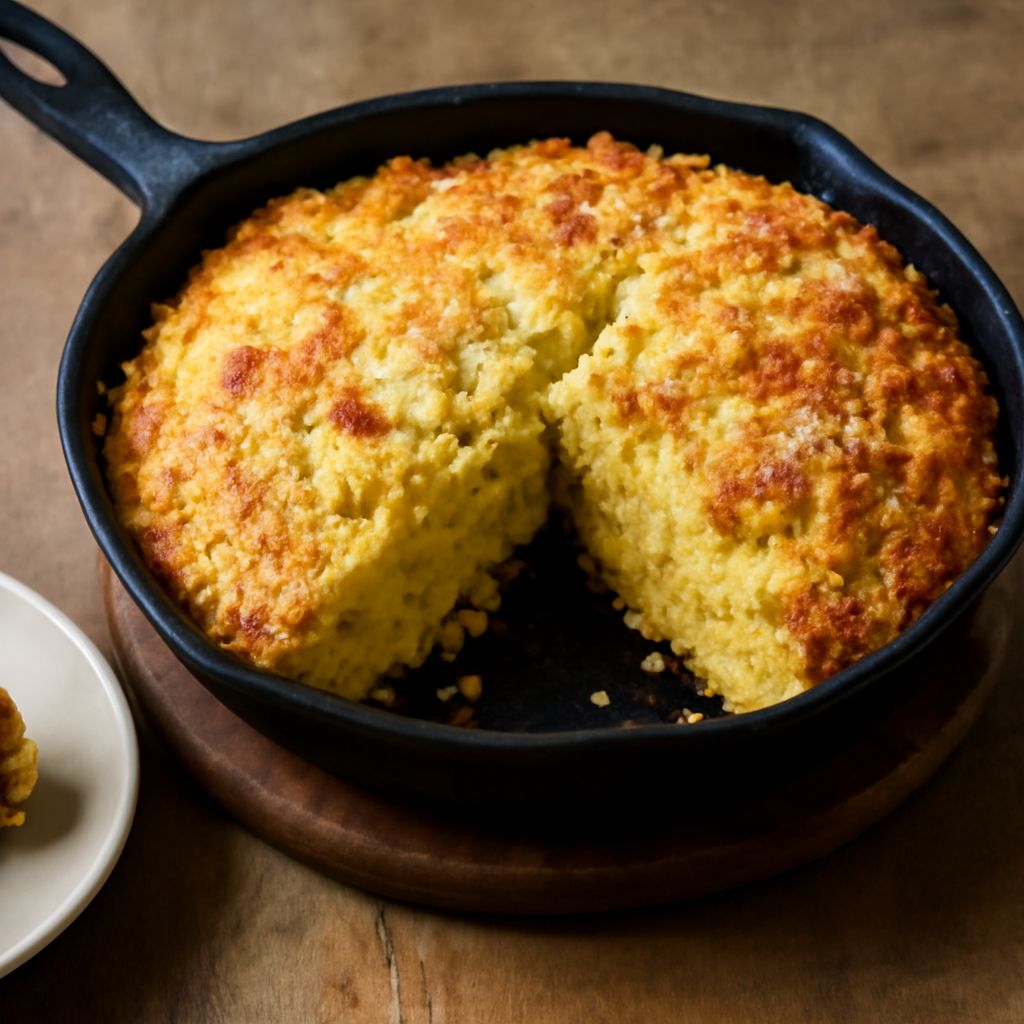
A hot iron pan gives cornbread a head start: the batter sizzles as it touches the fat, beginning a golden crust before the bread even reaches the oven. Inside, a simple buttermilk batter bakes into a tender, corn-forward crumb. This cornbread baked in a skillet is savory, sturdy enough to cut into wedges, and ready for a pot of beans or a bowl of greens.
A seasoned 9- to 10-inch cast-iron pan is the tool for the job. Heat it gradually in the oven, handle it with thick mitts, and have the batter ready before it comes out. Cornbread made in cast iron rewards that little bit of preparation with crisp edges and a beautifully browned bottom.
Cast Iron Cornbread: The Recipe
This cast iron cornbread makes one round, about 8 wedges. The formula for cornbread in a cast-iron skillet is a savory one. It is adapted from Sheri Castle’s skillet cornbread at King Arthur Baking. The cornmeal leads the flavor, a little flour helps the bread hold together, and buttermilk gives it a pleasant tang. There is no added sugar; serve honey at the table if you like a sweet touch.
You will need:
- A seasoned 9- to 10-inch oven-safe cast-iron skillet
- 1/4 cup bacon fat, or a mild cooking oil
- 1 1/2 cups whole-grain cornmeal
- 1/2 cup all-purpose flour
- 1/2 teaspoon baking powder
- 1/2 teaspoon baking soda
- 1/4 teaspoon table salt
- 1 large egg
- 1 1/2 cups well-shaken liquid buttermilk
Oven: 450°F, with a rack near the center. Bake: about 25 minutes. Allow roughly 20 minutes for preparation while the oven heats.
- Heat the pan. Put the fat in the skillet and set it in the oven as the oven heats to 450°F. Give both oven and pan time to reach temperature. Clear a heat-safe place beside your mixing bowl for the hot skillet.
- Mix the dry ingredients. Whisk the cornmeal, flour, baking powder, baking soda, and salt in a medium bowl until evenly combined. Break up any little pockets of leavening.
- Mix the wet ingredients. In a separate bowl, whisk the egg and buttermilk together. Pour them into the dry mixture and stir just until blended. A few small lumps are fine; avoid beating the batter smooth.
- Fill the pan. Wearing dry, thick oven mitts, remove the skillet and set it on the heat-safe surface. The handle is hot too. Carefully pour in the batter, keeping your hands away from any sputtering fat. It should sizzle. Spread it gently toward the edges if necessary.
- Bake. Return the pan to the center rack and bake for about 25 minutes, until the top is golden and the middle feels firm. A toothpick inserted in the center should come out without wet batter; a few moist crumbs are fine.
- Release and serve. Set the pan on a heat-safe surface, keeping a mitt over or beside the handle as a reminder that it is hot. Let the bread settle for about 5 minutes. Run a thin spatula around the edge, then carefully turn the round onto a board or rack. Turn it right side up and cut into wedges.
Why heat the skillet first?
Cast iron holds heat well. When cool batter meets a hot, lightly greased surface, the bottom and edges begin cooking at once. That first sizzle is your clue that the pan is ready to give the crust a good start. The oven then cooks the middle while the outside turns golden.
For this cast iron skillet cornbread recipe, place the pan in the oven while it preheats rather than setting a cold pan over high heat. Keep the pan level when you move it, and never leave hot fat unattended. If the fat is smoking heavily, remove the pan carefully, turn off the oven, and let it cool before wiping out the fat and starting again with fresh fat. Keep water away from hot fat.
Have the dry and wet ingredients measured before the oven is ready. Once combined, the batter should go into the pan promptly: the leavening begins working when it meets the liquid. Set the bowl close to the oven, but leave enough clear space to put down the heavy pan safely. An oven mitt on each hand makes the trip much steadier.
The cast-iron pan size affects the cornbread result. A 9-inch skillet makes a slightly thicker round than a 10-inch skillet, so begin checking at about 25 minutes and give the center more time if needed. A much larger pan spreads the same batter thinner and can cook it faster. For the first bake, use the stated size and learn how your oven handles this recipe for cornbread in a cast-iron skillet.
Mix for a tender middle
Cornmeal gives this bread its distinctive flavor and a pleasant grainy texture. Whole-grain meal can vary in coarseness: a coarser grind gives a more pronounced bite, while a finer one makes a smoother crumb. Check the package for freshness and use plain cornmeal, rather than a self-rising mix that already contains leavening and salt.
Buttermilk contributes tang and moisture. Its acidity also works with the baking soda to help the bread rise. Shake the carton before measuring so any thicker portion is distributed. This skillet cornbread recipe uses liquid buttermilk; a spoonable cultured product would make the batter much thicker.
Once the wet ingredients meet the flour, stir just until the dry streaks disappear. Too much mixing can make the finished bread tougher. The batter should be pourable, though thicker than milk. Scrape the bowl into the pan promptly instead of letting the mixed batter sit while the oven finishes heating.
If you are new to a skillet cornbread recipe, resist adjusting several ingredients on the first try. This cornbread recipe for a cast-iron skillet balances cornmeal and flour for a tender slice. The ratio of cornmeal to flour, the buttermilk, and the hot pan all influence the result. Bake this skillet-baked cornbread recipe once; then decide whether you want a finer crumb or more tang.
Brown edges, moist center
A golden top and firm center are useful companions when judging doneness. At around 25 minutes, open the oven and check the middle with a toothpick. Wet batter clinging to it means the bread needs more time. A few moist crumbs are welcome: the center can be cooked through and still tender.
If the edges are browning quickly while the middle remains wet, loosely lay a piece of foil over the top and continue baking, checking every few minutes. Keep the pan on the center rack. In cast-iron cornbread, a dark crust can develop before the center sets if the bread is too close to the oven’s lower heating element, so rack position matters for cornbread in a cast-iron skillet.
Try not to rely on the clock alone. Ovens and pans differ, and coarse cornmeal can produce a different-looking surface from a finer grind. For this cornbread recipe in a skillet, remove the pan once the center sets rather than waiting for a deeply brown top. A long extra bake can dry out the middle that makes a wedge so enjoyable.
Lift it out and bring it to the table
A brief rest lets the cornbread in the skillet firm up enough to release. Work a thin spatula gently around the rim and under any spot that feels attached. With mitts on, place a board or rack over the pan, hold both securely, and invert them together. If the skillet is too heavy to turn comfortably, cut wedges in the pan with a utensil safe for its surface and lift them out individually.
Turning the cast-iron cornbread out helps keep the underside from sitting in trapped steam. Serve warm with butter, alongside black-eyed peas, collard greens, or chili. Crumble a wedge into a bowl of beans and let it soak up the pot liquor, or split a piece and add a little honey. Cast iron cornbread also makes a welcome partner for a spoonful of tomato relish.
A well-seasoned pan helps this skillet-baked cornbread release, but the pan needs care afterward too. Let it cool before washing; a sudden change in temperature can damage hot cast iron. Clean away crumbs, dry the pan thoroughly, and follow the manufacturer’s care directions. Do not store leftovers in the skillet: transfer cooled bread to a covered container and refrigerate it for a few days, or freeze wrapped portions for longer storage.
What the finished bread tells you
A pale, soft bottom points to a pan that was not hot enough when the batter went in; next time, give the skillet time to heat with the oven and listen for that sizzle. If the crust is dark but the center is wet, move the rack to the middle and check that the pan is the recommended size; cover the top loosely and bake a little longer. If the center is dry and crumbly, check sooner on the next batch and take it out as soon as the middle is set.