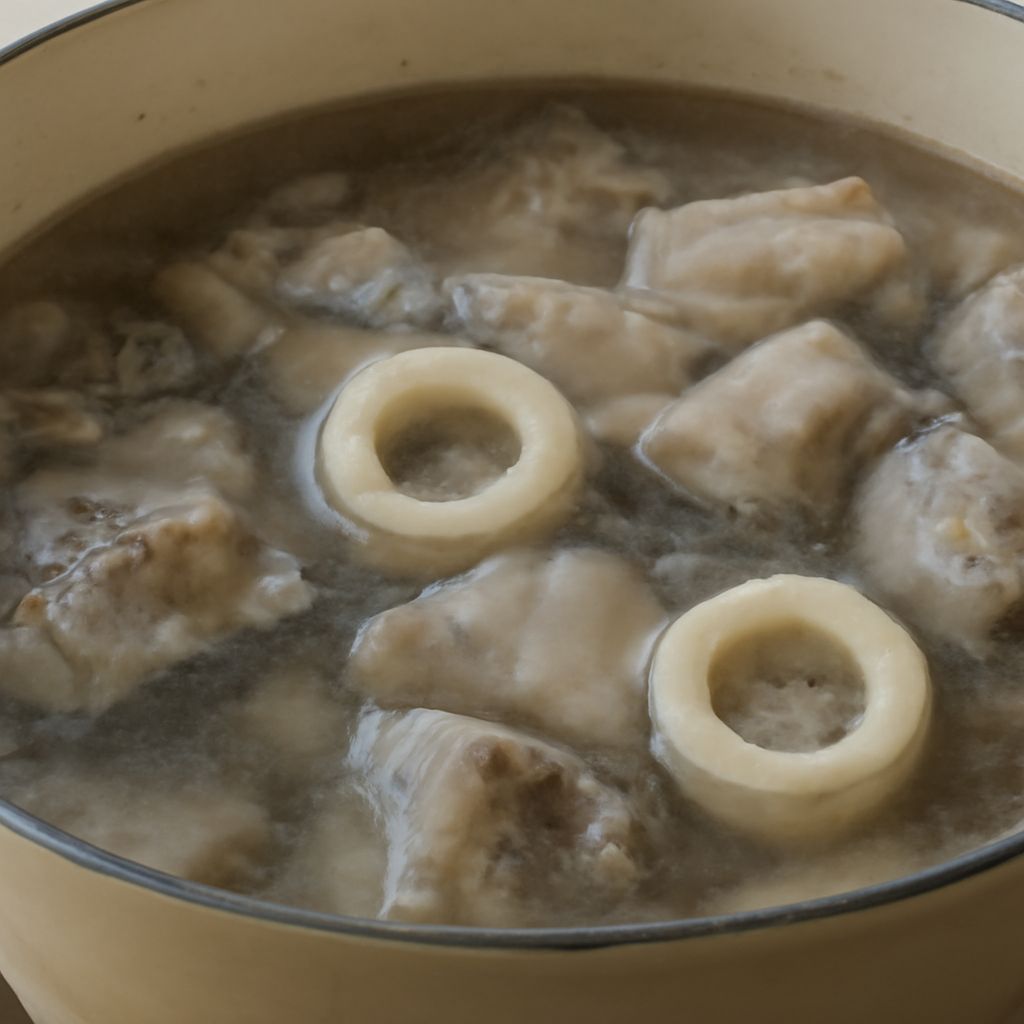
Ox bone soup, known in Korean as seolleongtang, is one of the most nourishing and deeply satisfying soups in Korean cuisine. Korean ox bone soup is prized for its milky white broth, which comes from hours of boiling beef leg bones until the collagen and marrow fully dissolve into the liquid. The result is a silky, protein-rich soup with a clean, meaty flavor unlike anything else.
Why the Broth Turns White
The milky color of Korean bone soup is not from dairy—it comes from the emulsification of fat, gelatin, and marrow into the boiling water. High heat and vigorous boiling force these components into suspension, creating the characteristic opaque, pale broth. Low and slow simmering produces a clear broth; a rolling boil produces the white ox bone soup broth traditional to seolleongtang.
Starting with a Blanch
Place 3 to 4 pounds of ox leg bones in a large pot and cover with cold water. Bring to a boil and cook 10 minutes—the water will become dark and foamy as impurities release. Drain completely, rinse each bone under cold running water, and scrub off any dark residue. This step is non-negotiable for clean-tasting beef bone soup korean style.
The Long Boil Return the clean bones to the pot, cover with fresh cold water by several inches, and bring to a rapid boil over high heat. Maintain a vigorous boil for the entire cooking time—this is what turns the broth white. Add more boiling water as needed to keep the bones submerged. Cook a minimum of 6 hours, though 8 to 10 hours produces a richer, milkier Korean bone marrow soup.
Adding Meat and Finishing
About 2 hours into cooking, add 1 pound of beef brisket or shank directly to the pot. It will cook gently in the boiling broth, becoming tender and flavorful. Remove the meat when fully cooked, around 1 to 1.5 hours later, and slice thinly to serve on top of the soup.
Skimming and Straining
Skim the surface of the broth occasionally during the long boil to remove any remaining foam. When the broth has reached the desired milkiness and richness, strain it through a fine-mesh strainer, discarding the spent bones. Season the finished korean bone soup generously with salt—seolleongtang is traditionally served unseasoned and each diner adds their own salt at the table.
Serving Ox Bone Soup
Ladle the hot ox bone soup into deep bowls. Add sliced brisket, a bundle of cooked glass noodles if desired, and thinly sliced green onions. Place salt and white pepper on the table for seasoning. Serve with kimchi, white rice, and banchan. The soup reheats beautifully and tastes even better the next day after the flavors have deepened overnight.