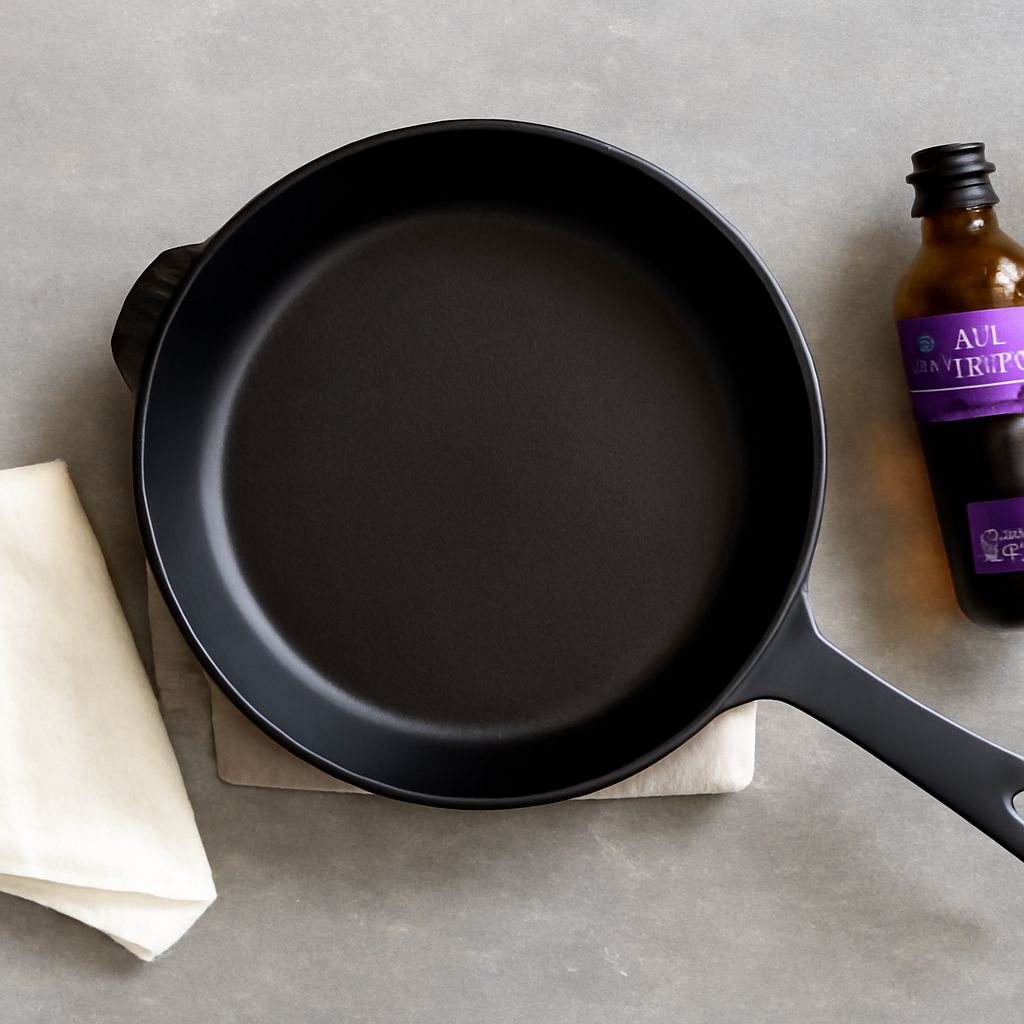
Proper seasoning cast iron skillet technique is the difference between a pan that sticks and one that cooks beautifully for decades. The process is straightforward, but small details matter. Seasoning cast iron in oven is the most reliable method and produces an even, durable coating that stovetop seasoning rarely matches. The right cast iron seasoning temp and the right oil make all the difference. Understanding cast iron seasoning temperature and technique removes the guesswork, and seasoning cast iron skillet in oven properly means you only need to do a full re-seasoning infrequently.
What Seasoning Actually Is
Seasoning is not a coating applied to the pan. It is polymerized oil, meaning fat molecules that have bonded to the iron surface through heat and linked together to form a slick, hard layer. Each time you cook with fat and apply enough heat, you add to this layer. A well-seasoned cast iron skillet is dark, semi-matte, and releases food reliably.
Choosing the Right Oil
Use an oil with a relatively high smoke point and a good ratio of polyunsaturated fats. Flaxseed oil, grapeseed oil, and vegetable shortening are all popular choices. Avoid olive oil for initial seasoning; its lower smoke point means it can go rancid before fully polymerizing. The key when seasoning a cast iron skillet is to apply oil in a very thin layer. A thick coat stays sticky and gummy, not hard and slick.
Oven Temperature for Seasoning
The cast iron seasoning temp recommended by most experienced cooks falls between 450°F and 500°F. At this range, the oil reaches its smoke point and begins polymerizing. Lower temperatures produce weaker layers. Higher temperatures can cause certain oils to break down rather than bond. For flaxseed oil specifically, the optimal cast iron seasoning temperature is around 450°F to 475°F.
Step-by-Step Oven Method
Preheat your oven to 450–500°F. Wash the skillet with hot soapy water to remove any residue, then dry it completely. Place it on a burner over medium heat for two minutes to evaporate all moisture; any remaining water will cause rust. Apply a thin layer of your chosen oil to every surface, including the handle and the exterior. Wipe off nearly all of it with a clean cloth. The pan should look almost dry, not shiny.
Place the skillet upside down on the center rack of the oven. Put a sheet of foil on the rack below to catch drips. Bake for one hour, then turn off the oven and let the pan cool inside. Repeat this process three to five times when building up seasoning on a new pan or after stripping an old one. This is the core of seasoning cast iron in oven properly.
Maintenance After Each Use
After cooking, rinse the pan while still warm with hot water. Use a stiff brush or a chain mail scrubber for stuck food. A small amount of mild soap occasionally will not harm a well-established seasoning layer, despite the common warning. Dry the pan on the stovetop over low heat for a minute. Apply a tiny amount of oil and wipe it around before storing. This keeps the cast iron conditioned between uses.
Troubleshooting Common Problems
If the pan is sticky after seasoning cast iron skillet in oven, you applied too much oil. Strip it and start over with thinner layers. If the surface is patchy, the oven temperature was likely too low, or the oil did not polymerize fully. Rust spots mean moisture was left on the iron. Scrub off the rust with steel wool, re-dry, and re-season from scratch. None of these problems are permanent.