Good sauces do more than add flavor — they define the character of a dish. A single well-chosen sauce can shift a simple protein or bowl of vegetables into something genuinely memorable. The range of options available is wide, from deeply fermented korean sauces to the bright, herb-forward profiles found in Southeast Asia.
This guide covers four categories that reward exploration: vietnamese sauces built on fish sauce and citrus, seafood sauces that complement delicate proteins without overwhelming them, and paleo sauces that deliver full flavor without relying on grains or dairy. Whether you’re building a pantry or looking for specific inspiration, these categories cover a broad range of cooking styles.
Korean Sauces: Fermented, Bold, Versatile
Gochujang and Doenjang
Gochujang is a fermented red chili paste that sits at the center of Korean cooking. It’s thick, slightly sweet, salty, and carries deep heat that builds gradually rather than hitting immediately. Use it as a marinade base, stirred into stews like sundubu jjigae, or thinned with sesame oil and vinegar into a dipping sauce. Doenjang, fermented soybean paste, is the Korean equivalent of miso but with a stronger, more pungent character. It’s the backbone of doenjang jjigae and works as a seasoning paste in dressings and marinades.
Ssamjang and Yangnyeom
Ssamjang is a blended paste of doenjang and gochujang with garlic, sesame, and onion. It’s the sauce served with Korean BBQ for wrapping grilled meat in lettuce leaves. Yangnyeom is a sticky, sweet-spicy glaze used on fried chicken — the korean sauces version of a Buffalo-style coating with a more complex base. Both are worth keeping in your refrigerator once you start cooking Korean food regularly.
Vietnamese Sauces: Fresh and Layered
Nuoc Cham Nuoc cham is the foundational dipping sauce of Vietnamese cooking. It combines fish sauce, lime juice, sugar, water, garlic, and chili. The ratio varies by cook and by region, but the result is always a balance of salty, sour, sweet, and spicy. It’s the sauce for spring rolls, grilled meats, vermicelli bowls, and anything that needs a sharp contrast to richness. Making it fresh takes under five minutes, and the flavor of these vietnamese sauces degrades quickly, so prepare it the day you need it.
Hoisin and Beyond
Hoisin sauce appears throughout Vietnamese cooking as a dipping sauce, most visibly alongside pho where it’s squeezed into the broth alongside sriracha. It’s thick, sweet, and fermented — made from soybeans, garlic, and various spices. Peanut dipping sauce, a blend of hoisin, peanut butter, and a small amount of coconut milk, accompanies Vietnamese spring rolls. Both are easy pantry staples that expand your range significantly.
Seafood Sauces: Matching Flavor to Protein
Classic Accompaniments
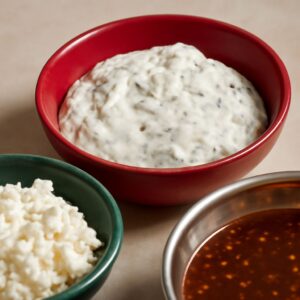
The strongest seafood sauces respect the protein rather than competing with it. For grilled fish, a simple beurre blanc — white wine, shallots, and cold butter — is hard to beat. Tartar sauce, made from mayonnaise, cornichons, capers, and lemon juice, works for fried fish and shellfish. Cocktail sauce (ketchup, horseradish, lemon, Worcestershire) pairs with chilled shrimp and oysters.
Butter-Based Options
Brown butter with capers and lemon — the French meunière preparation — suits delicate white fish like sole or flounder. A compound butter with tarragon and shallots melts over grilled salmon and creates its own sauce as it softens. These sauces don’t require long cooking and are better for it — the goal is contrast with the seafood, not competition.
Paleo Sauces: Flavor Without Grains or Dairy
Building paleo sauces means working without soy, cornstarch, refined sugar, or dairy — but the ingredient restrictions push creativity rather than limit results. Coconut aminos stand in for soy sauce and provide a similar salty-sweet profile. Arrowroot replaces cornstarch as a thickener. Tahini, avocado, and full-fat coconut milk create creamy textures without dairy. Chimichurri (fresh parsley, garlic, red wine vinegar, olive oil) is naturally paleo and works on everything from steak to grilled vegetables. Romesco sauce, made from roasted red peppers, almonds, garlic, and olive oil, gives you a thick, complex dip or spread with no dairy or grains involved.
Key Takeaways
The range of sauces available across these categories is wider than most home cooks realize. Korean sauces and vietnamese sauces offer fermentation-driven depth and brightness respectively. Seafood sauces should accent rather than overwhelm delicate proteins. Paleo sauces prove that dietary restrictions don’t require flavor sacrifices. Build your pantry one category at a time and your cooking range expands with each addition.