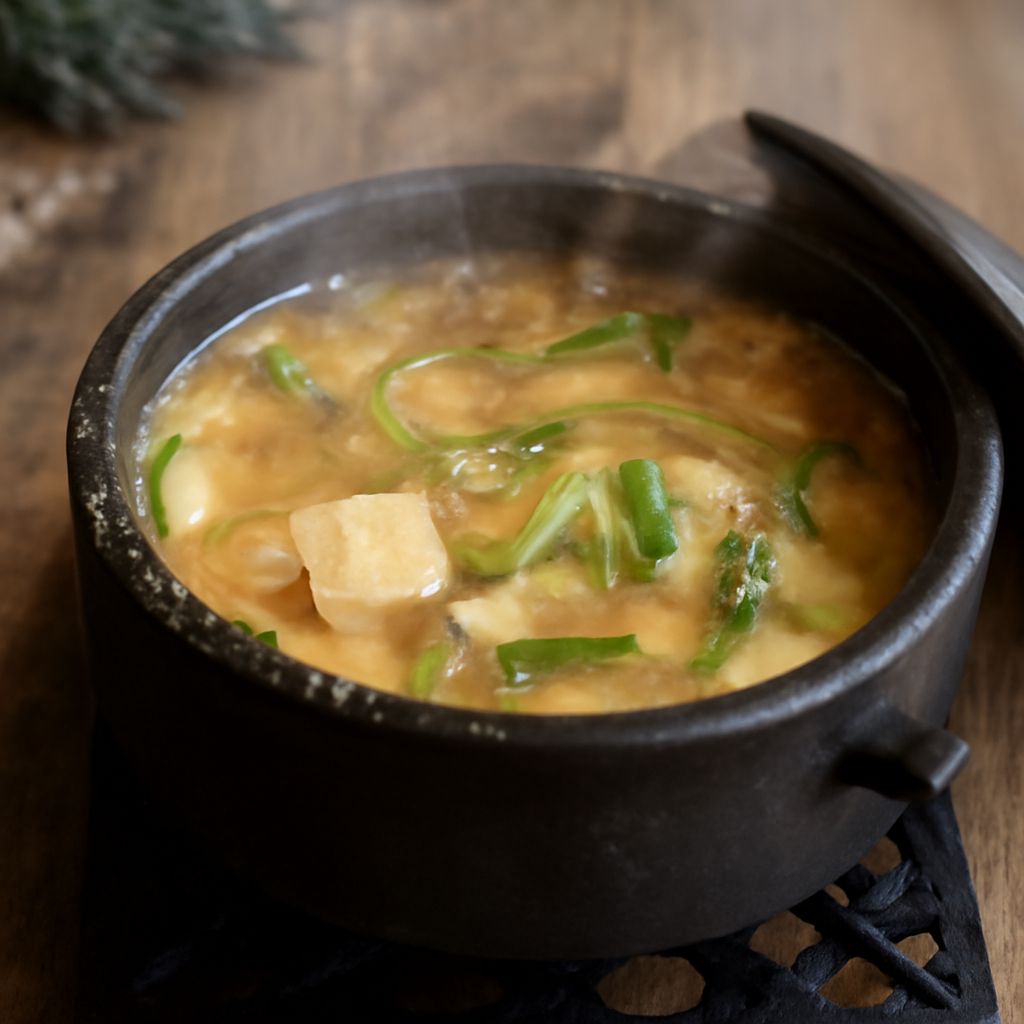
Soybean paste stew — known in Korean as doenjang jjigae — is one of the most deeply flavored dishes in Korean home cooking. It’s savory, earthy, and slightly pungent in a way that makes it immediately satisfying. A bowl of soybean paste soup warms you through from the first spoonful.
This guide covers authentic technique for making soybean soup at home, including the right type of paste to use, the broth method, and the classic vegetable and tofu additions. Understanding korean soybean paste soup means understanding doenjang — and once you cook with it a few times, you’ll see why this korean bean paste soup earns a permanent place in regular rotation.
What Is Doenjang
Korean vs. Japanese Miso
Doenjang is fermented soybean paste, similar in concept to Japanese miso but distinct in character. It’s coarser in texture, more pungent in aroma, and deeper in flavor. Korean doenjang undergoes a longer fermentation process than most Japanese miso varieties, which produces a more assertive, complex taste. Do not substitute Japanese miso directly — the flavor profile is noticeably different. Look for doenjang at any Korean grocery store; it comes in sealed tubs, typically dark brown to reddish-brown in color.
Building the Broth
The Anchovy Kelp Base Authentic soybean paste stew starts with a stock made from dried anchovies and kelp. Bring four cups of cold water to a near-boil with eight to ten dried anchovies (gutted and de-headed) and a four-inch piece of dried kelp. Simmer for 10 minutes, then strain. This broth is the backbone of the dish — clean, oceanic, and savory. Dissolve two to three tablespoons of doenjang directly into the hot broth. The paste should melt in fully with stirring. Add minced garlic and a small amount of gochugaru if you want heat.
Classic Additions
Tofu and Vegetables
Firm or medium-firm tofu cut into half-inch cubes goes in first, followed by diced zucchini, mushrooms (king oyster or shiitake work well), and sliced onion. These are the standard vegetables in a traditional korean soybean paste soup. Add everything to the simmering broth and cook for eight to ten minutes. The tofu absorbs the doenjang broth and takes on its savory character while the zucchini softens to a silky texture. Diced potato or sweet potato can replace or supplement the zucchini for a heartier version.
Protein Options
Beyond tofu, soybean soup variations include clams, beef brisket thinly sliced, or pork. Clams add a natural brininess that complements the doenjang. Beef or pork should be added early so they cook through during the simmer. The protein isn’t strictly necessary — the korean bean paste soup is completely satisfying as a vegetable and tofu preparation, and many households make it without meat.
Finishing and Serving
Taste the broth and adjust — add more doenjang for saltiness and depth, more garlic for sharpness, or a small pinch of sugar if it tastes too astringent. Crack a raw egg directly into the bubbling stew just before serving and let it set partially — the runny yolk enriches the broth. Finish with sliced green onions. Serve the soybean paste stew in individual stone bowls or ceramic bowls directly alongside steamed white rice. Eat it the traditional way: alternate bites of rice with spoonfuls of stew and broth. This dish doesn’t keep well — the tofu becomes waterlogged and loses texture within a day — so make and eat it fresh.