A white sauce recipe is one of the most useful things you can have in your cooking toolkit. It works as a base for pasta dishes, vegetable gratins, lasagna, and more. White sauce ingredients are minimal: butter, flour, milk, and seasoning. That simplicity is exactly why it shows up in so many recipes. Knowing what is white sauce made of means you can build on it in countless directions.
Milk sauce is the foundation of this preparation, and the ratio of fat to flour to liquid determines the final thickness. A creamy white finishing sauce for pasta or chicken takes only minutes once you understand the technique. This guide breaks it all down clearly.
What Is White Sauce Made Of
The classic answer: butter, plain flour, and whole milk. That is the core of what is white sauce made of, known in French cuisine as béchamel. Salt, white pepper, and a pinch of nutmeg round out the flavor. Some versions add cream for extra richness, or Parmesan for a cheesy variation. The base stays the same regardless of what you add to it.
Essential White Sauce Ingredients
Choosing the right white sauce ingredients makes a difference in the result. Use unsalted butter so you control the salt. Plain all-purpose flour works best; do not substitute self-raising flour. Whole milk gives the smoothest texture. Semi-skimmed milk works but produces a thinner, slightly less rich sauce. Warm the milk before adding it to the roux. Cold milk poured into hot butter and flour is the main reason white sauce turns lumpy.
Beyond the core trio, common additions include bay leaves simmered in the milk, a small piece of onion, and whole peppercorns. Remove these aromatics before whisking the milk into the roux. They add background depth without complicating the final flavor.
Step-by-Step White Sauce Recipe
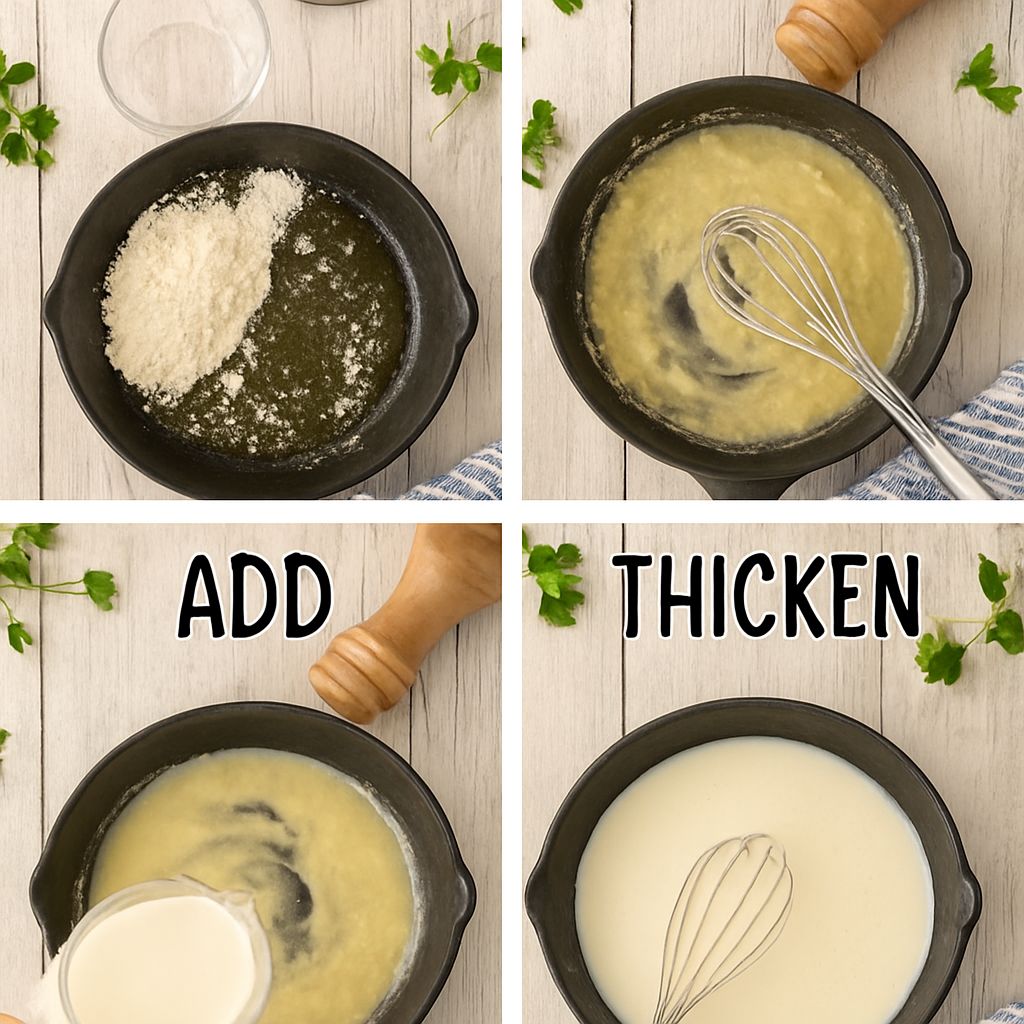
Melt two tablespoons of butter in a heavy-based saucepan over medium heat. Add two tablespoons of plain flour and stir constantly for one to two minutes. The paste should smell nutty, not raw. This step cooks out the flour taste and is not optional. Remove the pan from heat, then pour in warmed milk gradually, about a quarter cup at a time, whisking thoroughly after each addition. Return to low heat and stir until the sauce thickens. Season with salt, white pepper, and a little grated nutmeg.
This white sauce recipe takes around 10 minutes. The key is patience with the milk addition. Rush it and the sauce will be lumpy. Take your time and you get a smooth, glossy result every time.
Milk Sauce Variations
A milk sauce becomes a Mornay sauce when you stir in grated Gruyère or Cheddar off the heat. Add cooked mushrooms for a woodland version that works beautifully with chicken. Stir in Dijon mustard and use it to dress cauliflower. The basic ratio stays fixed while the flavor direction shifts completely. This flexibility is why the sauce has remained relevant for centuries across dozens of cuisines.
Making a Creamy White Finishing Sauce
A creamy white finishing sauce differs from a standard béchamel in that it is slightly thinner and often finished with a splash of cream or pasta water. Use it to coat pasta just before serving rather than baking it into a casserole. The sauce clings to each strand without weighing it down. Grated Parmesan, a squeeze of lemon, and a turn of black pepper are all it needs at the end.
For a finishing sauce on grilled chicken or fish, reduce the sauce slightly until it coats the back of a spoon, then stir in a small knob of cold butter just before serving. That final addition gives the sauce a sheen and a richer mouthfeel without making it heavy.
Troubleshooting Common Problems
Lumpy sauce usually means the milk was added too quickly or was too cold. Fix it by passing the sauce through a fine sieve and whisking vigorously. Thin sauce needs more time over low heat, stirring constantly. Thick sauce can be loosened with warm milk added one tablespoon at a time. If the sauce tastes floury, it needs another two minutes of cooking. These are all fixable problems that come down to technique, not ingredients.