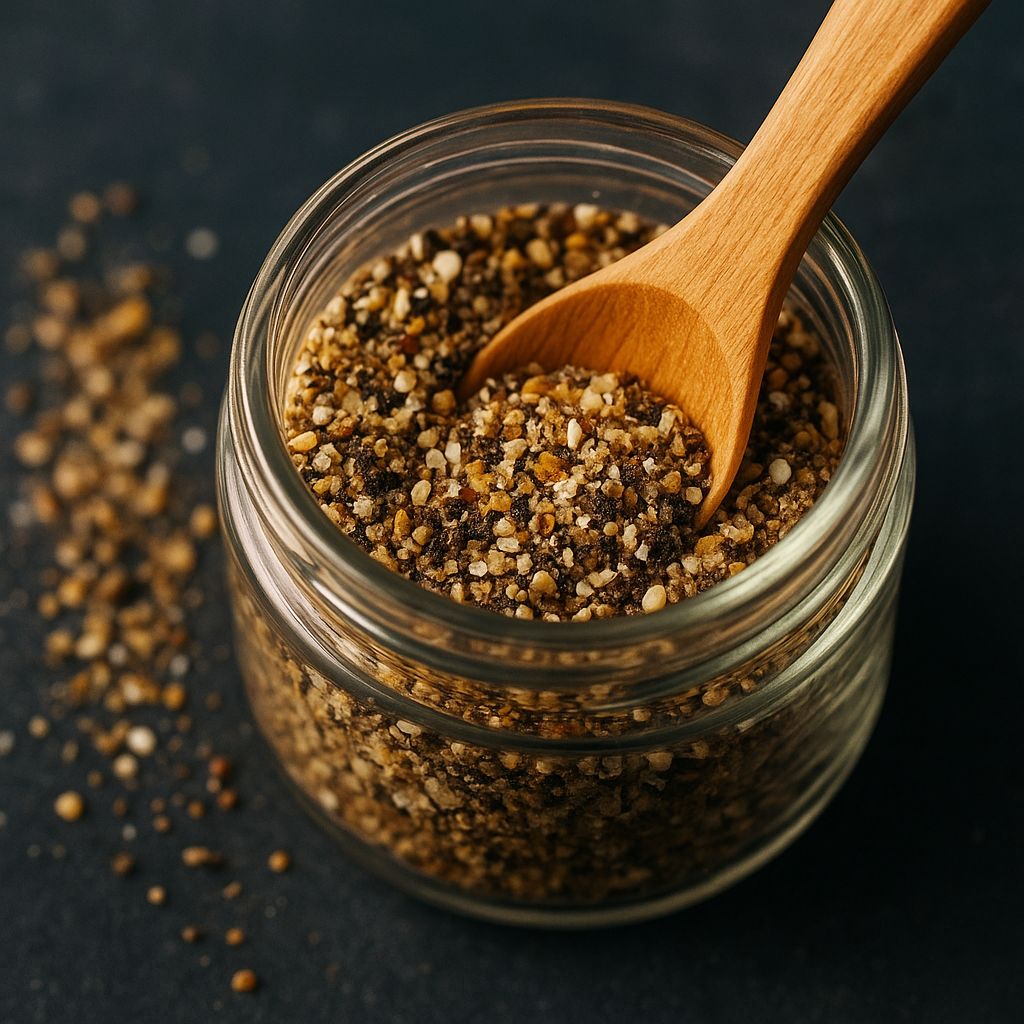
Garlic pepper seasoning is one of the most versatile dry blends in any kitchen. The combination of garlic’s pungent heat and black pepper’s sharp, woody bite creates a pairing that works across proteins, vegetables, and sauces. Citrus-forward variations like orange pepper seasoning and lime pepper seasoning add brightness that pure garlic-pepper blends lack. Heat-forward options like cayenne pepper seasoning increase the intensity for dishes that need it. A garlic pepper sauce extends the same flavor profile into a liquid format for dipping or finishing.
Understanding each variant helps you choose the right seasoning for the job. A garlic pepper blend that works on steak might overwhelm delicate seafood. Knowing when to reach for lime pepper versus cayenne makes the difference between a well-seasoned dish and an imbalanced one.
Garlic Pepper Seasoning: The Base Blend
A standard garlic pepper seasoning blend uses: garlic powder, black pepper, onion powder, and salt in roughly equal parts with a slight lean toward garlic. Adding dried parsley gives color and a mild herby note. This base blend works on chicken, pork, beef, and vegetables. Store it in an airtight container away from heat and light.
Orange Pepper and Lime Pepper Seasoning
Orange pepper seasoning adds dried orange zest and a touch of sweetness to the garlic-pepper base. It pairs especially well with duck, salmon, and roasted sweet potatoes. Lime pepper seasoning uses dried lime zest and citric acid for a sharper, more acidic profile. Lime pepper seasoning works on grilled fish, shrimp, and Mexican-inspired preparations. Both variants replace the heavy savory note of black pepper with a citrus brightness that changes the entire character of the blend.
Cayenne Pepper Seasoning
Cayenne pepper seasoning is a pure heat amplifier. Unlike black pepper, which adds heat and flavor, cayenne primarily delivers capsaicin-based heat. Use it to boost the intensity of any blend. In a garlic pepper seasoning context, adding one part cayenne to four parts black pepper raises the heat without changing the core flavor profile significantly. Cayenne pepper seasoning is also used as a standalone finishing spice on eggs, avocado, and soups.
Making a Garlic Pepper Sauce
A garlic pepper sauce takes the dry blend in a wet direction. Combine: three tablespoons butter, four minced garlic cloves, one teaspoon cracked black pepper, one tablespoon lemon juice, and two tablespoons chicken broth. Cook over medium heat until the garlic softens. The resulting garlic pepper sauce is thin and intensely flavored, suitable for finishing grilled chicken or tossing with cooked pasta. Add cream for a richer consistency.
Key Takeaways
Garlic pepper seasoning pairs well with nearly everything. Use citrus variants like lime pepper for seafood and lighter proteins. Reserve cayenne pepper seasoning for applications that need pure heat. A quick garlic pepper sauce extends the same flavor profile into a versatile finishing liquid.