Parmesan cream sauce for pasta is one of the most satisfying things you can make in under 20 minutes, requiring nothing more than a handful of ingredients you likely already have. A parmesan cream sauce recipe builds on butter, garlic, heavy cream, and freshly grated Parmesan, each component earning its place in the final result. Knowing how to make parmesan sauce correctly comes down to understanding heat control, because the emulsion that makes this sauce silky can break under high heat. Parmesan sauce for pasta works across fettuccine, penne, gnocchi, and even baked preparations with slightly different application techniques. A garlic parmesan white sauce extends the same base with a stronger garlic presence and is especially well-suited for chicken dishes and pizza.
The Foundation: Butter, Garlic, and Cream
Starting the Sauce
Melt two tablespoons of unsalted butter in a wide pan over medium-low heat. Add two to three minced garlic cloves and cook gently for about two minutes until fragrant and just starting to turn golden. Do not let the garlic brown at this stage; it will become bitter and the flavor transfers into the final sauce. Pour in one cup of heavy cream and bring to a gentle simmer. Keep the heat at medium-low throughout the entire process. A parmesan cream sauce recipe that boils aggressively will reduce too fast, concentrate salt, and risk breaking the sauce.
Adding the Parmesan
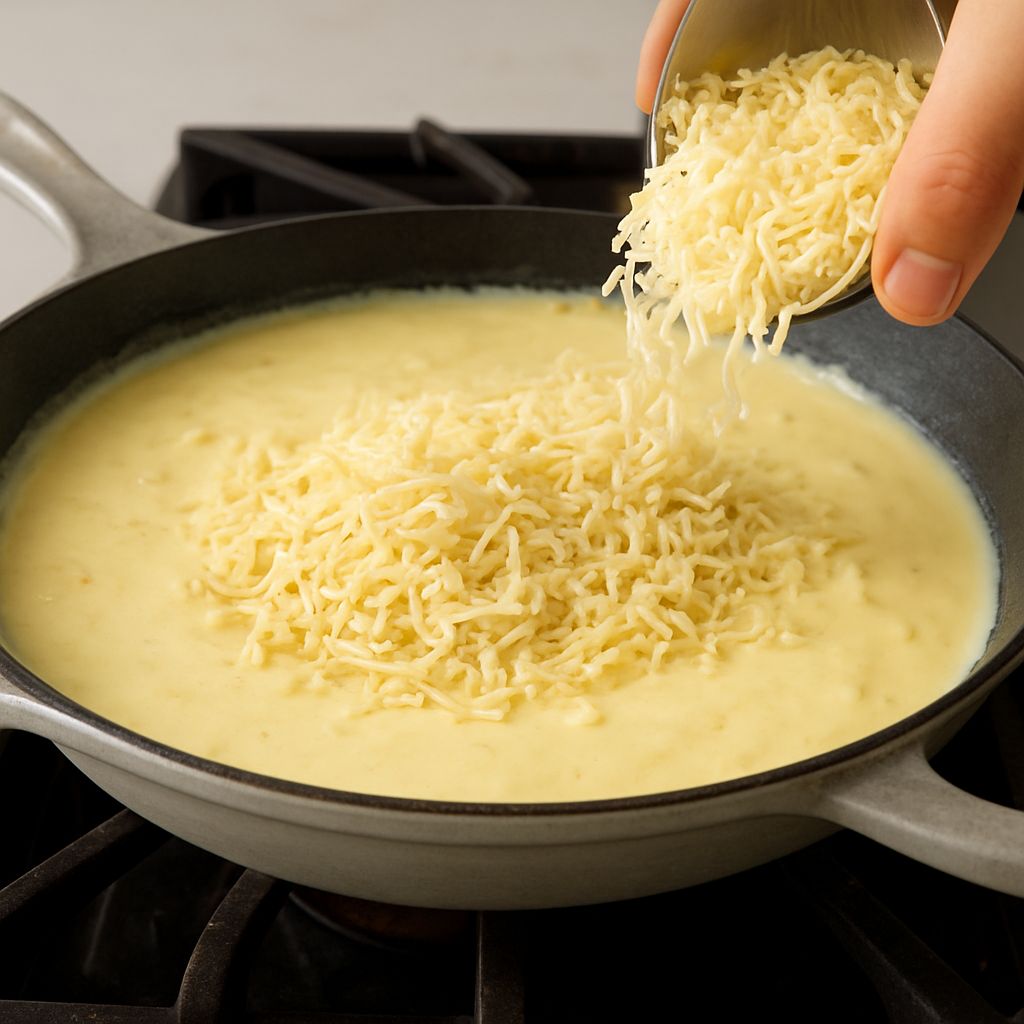
Remove the pan from heat before adding the cheese. Add half a cup to three-quarters of a cup of freshly grated Parmesan in two or three additions, stirring well between each. Cheese added off the heat melts smoothly and evenly without clumping or turning grainy. Stir until the sauce is completely smooth and the cheese is fully incorporated. Season with salt, a generous amount of white pepper, and a pinch of freshly grated nutmeg. Return briefly to low heat for one minute if needed to bring the sauce to serving temperature.
How to Make Parmesan Sauce: Technique Notes
The key element in how to make parmesan sauce that stays silky is temperature management. High heat causes the proteins in the cheese to seize and the fat to separate. If the sauce breaks and looks greasy and grainy, remove from heat immediately, add a tablespoon of cold cream, and whisk vigorously. This often brings the emulsion back. A few tablespoons of pasta cooking water added to the sauce just before tossing also help it cling smoothly to the pasta without becoming gluey.
Pre-grated Parmesan in bags or tubs does not work well in parmesan cream sauce for pasta. Anti-caking agents in those products prevent smooth melting. Buy a wedge and grate it yourself on a fine grater immediately before using.
Parmesan Sauce for Pasta: Application
Cook pasta one minute less than the package directions indicate. Reserve one cup of pasta cooking water before draining. Add the drained pasta directly to the warm sauce in the pan over low heat. Add a splash of pasta water and toss quickly to coat every strand. The starch in the cooking water emulsifies with the fat and cream to create a coating that clings rather than pools at the bottom of the bowl. This technique is the same whether you are using parmesan sauce for pasta, gnocchi, or any other starchy base.
Garlic Parmesan White Sauce for Other Applications
A garlic parmesan white sauce with more garlic and slightly less cream works as a pizza base, a dipping sauce for breadsticks, or a topping for baked chicken. Increase the garlic to four or five cloves and use half and half instead of heavy cream for a lighter consistency. This garlic parmesan white sauce stays spreadable at serving temperature rather than thickening into a firm coating like a fuller cream sauce would. Add a tablespoon of cream cheese to the garlic parmesan white sauce for extra body if you are using it as a pizza base that needs to hold toppings without becoming runny in the oven.