Korean army stew, known in Korean as Budae Jjigae, has one of the more unusual origin stories in modern cuisine. After the Korean War, American military surplus food, including Spam, hot dogs, and canned beans, made its way into local markets near the military bases. Korean cooks combined these surplus ingredients with traditional Korean flavors to create army stew korean style, a dish that is both historically significant and genuinely delicious.
What began as resourceful improvisation became a beloved national dish. Today army soup appears in dedicated restaurants across South Korea, often cooked tableside in a wide, shallow pot. Korean army soup uses gochujang and doenjang for heat and fermented depth while incorporating processed meats and instant ramen noodles. Korean military stew has evolved into a social food, best shared by several people around a communal pot.
Traditional Ingredients
Processed Proteins
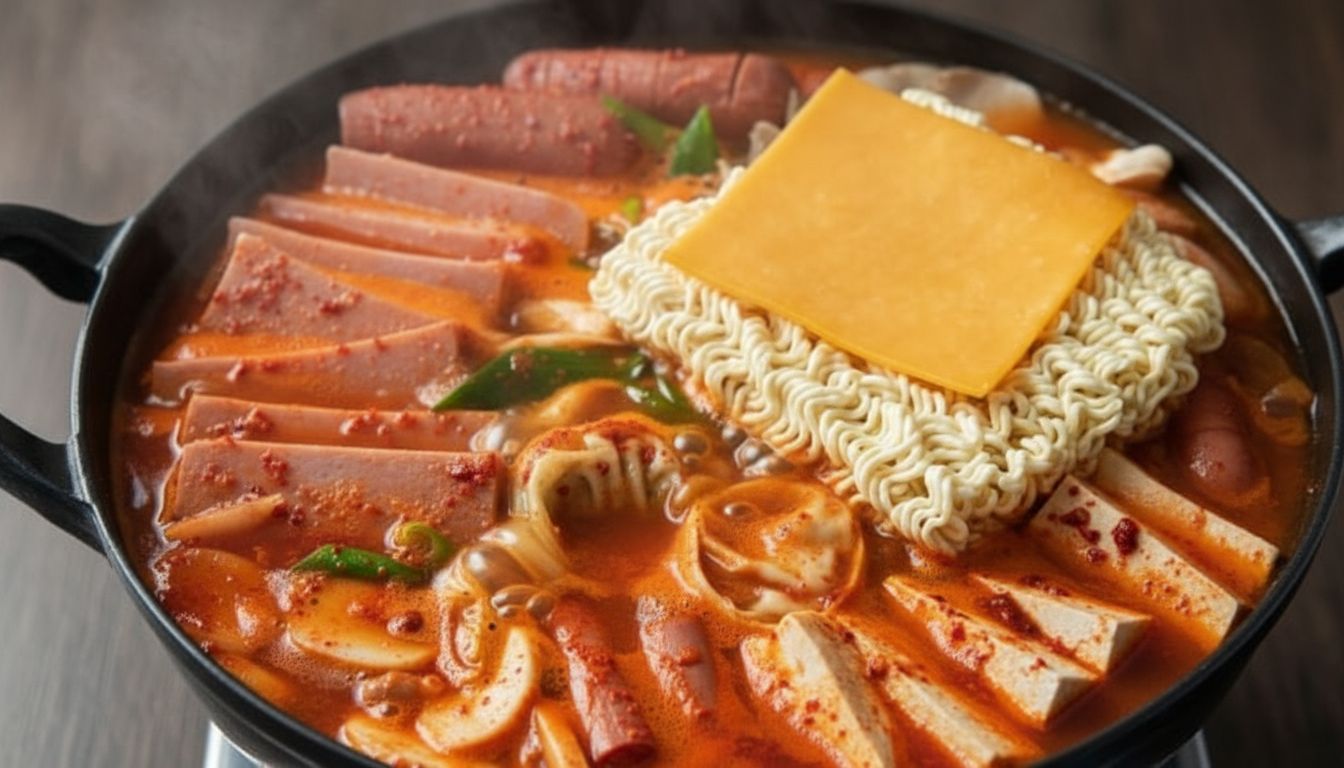
Spam is non-negotiable in an authentic Korean army stew. It provides saltiness and a meaty texture that holds up during simmering. Hot dogs or cocktail sausages add a different character. Some versions include canned baked beans, which were another common surplus item and contribute sweetness and body to the broth.
Korean Base Ingredients
Gochujang provides fermented chili heat. Gochugaru adds further pepper depth. Doenjang, a fermented soybean paste, contributes umami and complexity. Tofu adds substance without heaviness. Kimchi is often included, both for its tang and for the color it gives the army stew korean style broth.
Building the Broth
A good army soup broth starts with anchovy stock or a light chicken broth. In a wide pot, layer the ingredients: sliced Spam and hot dogs, tofu cut into cubes, sliced mushrooms, and kimchi. In a separate bowl, whisk together two tablespoons gochujang, one tablespoon doenjang, one tablespoon soy sauce, two teaspoons gochugaru, and one minced garlic clove. Add four cups of broth to the pot, then spoon the gochujang mixture over the ingredients. Bring to a simmer and cook for ten to fifteen minutes.
Adding Ramen Noodles
Instant ramen noodles go in during the last five minutes of cooking. They absorb the spiced broth and soften just enough while retaining some chew. Many restaurants add the noodles at the table, letting diners watch them cook in the communal pot. The noodles are a core part of Korean military stew and should be added only when the rest of the ingredients are fully cooked. A slice of American cheese melted on top at the very end is traditional and adds a creamy, mild contrast to the spicy broth.
Serving Korean Army Soup
This is a table-center dish. Set the pot in the middle and serve with steamed rice on the side. Korean army soup tastes better when each person takes from the communal pot. Refill the pot with additional broth and ingredients as it empties; this style of eating, called Jeongol, involves continuous replenishment throughout the meal. The flavors in the pot concentrate and deepen as the meal progresses.
Modern Variations
Contemporary Korean army stew adaptations add sliced rice cakes, macaroni, or glass noodles alongside the ramen. Some versions incorporate pulled pork or chicken in place of Spam for a different protein profile while keeping the same gochujang-doenjang base. The dish remains popular precisely because it is forgiving; the base flavors are assertive enough to accommodate almost any additional ingredient without losing its identity.