Tender, sweet beets with skins that slip away under your fingers are well within reach. Roast the beets in the oven with their skins on, then let them cool just enough to handle. You will have beautiful roots ready for salads, warm sides, or a simple splash of vinegar.
Cooking whole beets until roasted through takes patience rather than fuss. Plan on 400°F and start checking small roots after 35 minutes. A thin knife sliding easily into the center is your best guide; large beets can take considerably longer.
Roasted Whole Beets: The Basic Method
For this oven roasted beets recipe, use about 2 pounds of beets, preferably close in size. That is roughly four medium roots, though produce varies. The amount serves four to six as a side. You will also need a tablespoon of olive oil, a pinch of salt, foil, and a rimmed baking sheet or small baking dish.
- Heat the oven to 400°F. Set a rack near the middle. Trim the leafy tops, leaving about 1 inch of stems, and trim the long root tips if they are very thin. Save fresh-looking greens for another meal.
- Wash the roots. Scrub them under cool running water to remove soil, paying attention to the creases near the stems. Pat dry. Leave the skin intact; it protects the flesh during cooking and is easier to remove afterward.
- Wrap and arrange. Rub the beets lightly with the oil and sprinkle with salt. Wrap each one loosely in foil, sealing the edges, and put the packets on a rimmed baking sheet. A little space inside each packet helps keep the beet from sticking to the foil.
- Roast until tender. Start checking small beets after 35 minutes and medium ones after 45 minutes. Open a packet carefully, then insert a thin knife or skewer into the center. It should slide in easily, with little resistance. If it meets a firm core, reseal and return the beet to the oven.
- Cool and peel. Let the packets stand until the beets are cool enough to hold, usually 10 to 15 minutes. Unwrap, then rub off the skins with a paper towel or your fingers. Trim the stem and root ends and slice as you like.
This oven-roasting recipe for whole beets uses individual packets; roasting beets whole this way lets you remove smaller roots as soon as they are ready. The foil holds moisture close to the surface and makes peeling easier; the finished flesh is tender and pleasantly earthy. These roasted whole beets can be served warm or cold.
How Long Should Different Sizes Take?
For roasted beets, oven temperature should stay at 400°F while you use these ranges as a starting point. Measure across the widest part of the root, excluding its stem and tail:
- Small, about 1 to 2 inches wide: approximately 35 to 50 minutes.
- Medium, about 2 to 3 inches wide: approximately 45 to 75 minutes.
- Large, 3 to 4 inches wide: approximately 75 to 100 minutes or longer.
These are estimates, not a promise from the clock. Shape, freshness, and your oven all affect the time. A squat beet and a long, thick one may finish at different moments even if they weigh the same. Begin at the early end of the range, then check every 10 to 15 minutes.
To see how to roast whole beets successfully, pay attention to the center. Push a narrow knife through the thickest part; it should enter and withdraw with little resistance. A firm patch in the middle means more time is needed. If you feel unsure, compare the resistance to a cooked potato: tender all the way through, but not collapsing.
When roasting whole beets of mixed sizes, check and remove the smallest first. Close the remaining packets and return them to the oven. Place the hot packets on a plate or heatproof board so their juices do not drip on the counter. This small bit of attention gives you evenly cooked roots without waiting for the largest one to decide the fate of the rest.
Choose and Prepare the Roots
Look for firm beets with smooth, unbroken skin. If the greens are attached, crisp leaves and sturdy stems are a welcome sign. The tops draw moisture from the roots during storage, so cut them off when you get home, leaving a short stem. Store the greens separately and use them promptly.
Red and golden beets both work when you roast the roots whole in the oven. Red beets can stain a cutting board and pale ingredients, while golden ones leave less color behind. If you are making a mixed salad, peel and dress each color separately, then combine just before serving to keep the contrast bright.
A good scrub matters because soil can hide around the shoulders. A vegetable brush is helpful, but there is no need to scrub hard enough to break the skin. Trim off damaged spots before wrapping. Leave most of the skinny tail in place if it is sound; it is simple to cut off once the root is cooked.
If the beets are enormous, allow extra time or cut them in half for a quicker meal. The cut surfaces will cook differently and the pieces will no longer be whole, but they can still be delicious. Smaller, similarly sized roots are the easiest choice when the goal is a tidy batch of whole roasted beets.
Peel Without a Struggle
Open the foil carefully, keeping your hands away from escaping steam. Let the beets rest until you can hold them comfortably, but peel while they are still warm. Grip one with a paper towel and rub the skin; it should come away in patches. Use a small paring knife for stubborn spots around the stem and root ends.
If the skin clings everywhere and the center still feels firm, the beet likely needs more cooking. Rewrap it and return it to the oven, then test again. If only a small patch sticks, simply pare that patch away. Oven-roasting whole beets until tender makes the skins easier to remove. Do not leave a hot packet unattended within reach of children, and use a towel or oven mitt when moving it.
For less staining, wear food-safe gloves or use paper towels to handle red beets. A cutting board that can be washed immediately is useful, too. To keep a light-colored salad dressing bright, toss red pieces separately and add them to the plate last. Beet juice is cheerful on a plate and rather less welcome on a favorite shirt.
Season and Serve
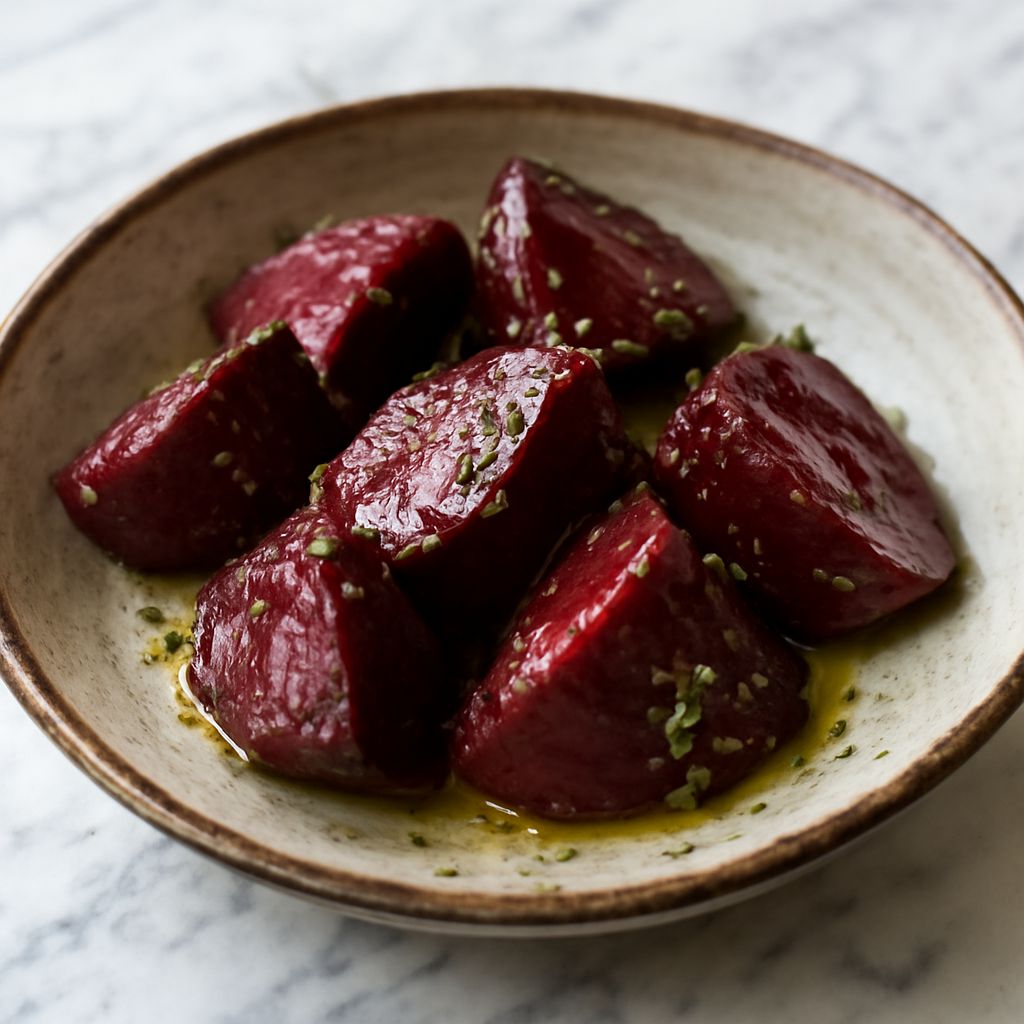
Once your whole beets are roasted, slice the peeled roots into wedges or rounds. While still warm, toss them with a tablespoon of olive oil, a teaspoon or two of vinegar or lemon juice, and salt and pepper to taste. The acidity wakes up the beets’ sweetness; add it gradually and taste as you go. Finish with chopped parsley if you have it.
A batch of beets roasted in the oven can become several different meals. This recipe for oven-roasted beets makes an easy base for each. For a cool salad, pair slices with orange segments, greens, and crumbled goat cheese. For a Southern-inspired plate, serve warm wedges beside black-eyed peas and greens, with a little cider vinegar. Chopped toasted pecans add a welcome crunch to either version.
You can also fold diced beets into cooked grains with scallions and a mustard vinaigrette. Wait until serving to add soft greens, so they keep their texture. If you prefer your beets warm, reheat them gently with a splash of water and a covered pan, then season after they are hot.
Store Cooked Beets
Refrigerate cooked beets in a covered, shallow container within two hours of cooking, or within one hour if the room is above 90°F. Use refrigerated leftovers within three to four days. The USDA’s leftover guidance gives the same storage window for safely refrigerated cooked foods. Keep the beets plain if you want the flexibility to season them differently later.
For longer storage, freeze peeled, cooled beets in portions. Slice or dice them first if that suits your plans, pack them in freezer-safe containers, and label them with the date. Thaw in the refrigerator. The texture may soften, making the thawed pieces especially handy in soups or blended dips.
A Quick Reference for Your Next Batch
- Set the oven to 400°F; scrub and wrap each beet in foil.
- Start checking small roots at 35 minutes, medium roots at 45 minutes, and allow 75 minutes or more for large ones.
- A thin knife should slide easily into the center. Give firm roots another 10 to 15 minutes and test again.
- Cool until comfortable to handle, rub off the skins, and season to taste.
Once you know how to roast beets whole, the knife test does the deciding. Pull each packet when its center is tender, and the rest is a matter of peeling and choosing what to serve alongside.