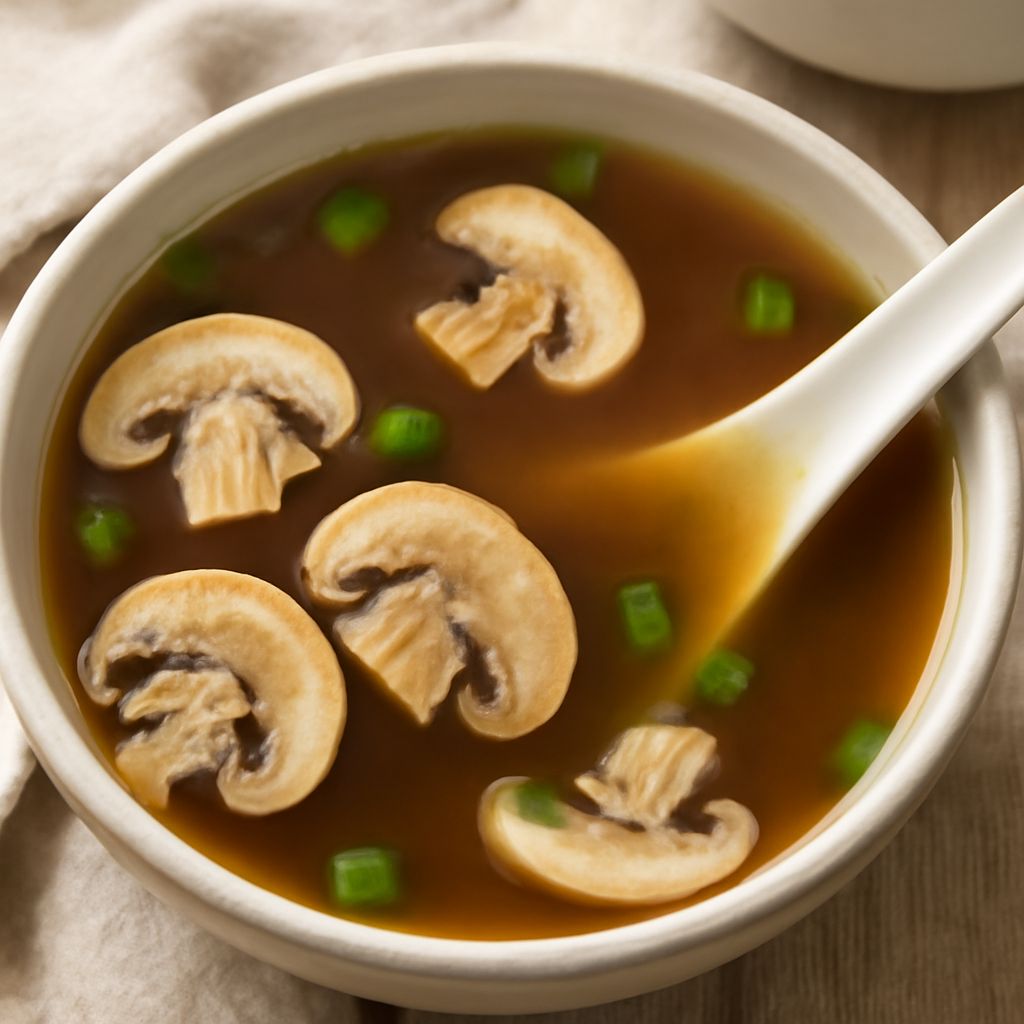
Japan has one of the world’s most refined soup traditions, and japanese soup culture spans everything from the clean simplicity of o-suimono to the deep, complex bowls of tonkotsu ramen. The styles that most home cooks encounter first are the clear broth soup types: light, precisely seasoned, and built around dashi stock. These soups reward careful technique more than complex ingredient lists.
Whether you’re looking for a specific japanese soup recipe or just trying to understand the range of clear soups in Japanese cooking, this guide covers the most useful styles. You’ll also find a note on sushi soup, the light miso or clear broth typically served alongside sushi in Japanese restaurants. Each style follows the same core principle: clean broth, precise seasoning, minimal garnish.
Dashi: The Foundation of Japanese Soup
Most japanese soup styles start with dashi, a light stock made from kombu (dried kelp) and katsuobushi (dried bonito flakes). The technique is fast: steep kombu in cold water, heat to just below a simmer, remove the kombu, add the bonito flakes, steep for five minutes, then strain. The resulting clear broth soup base is pale, subtly oceanic, and deeply umami-forward without being assertive.
Instant dashi powder is a practical alternative that most Japanese households use daily. It’s not identical to fresh dashi but it’s fast and produces a genuinely good result for weeknight japanese soup recipe applications.
O-Suimono: The Formal Clear Soup
O-suimono is the most formal style among Japanese clear soups. It’s served in small lacquered bowls as part of a kaiseki meal or special occasion dinner. The seasoning is minimal: dashi, a small amount of soy sauce, salt, and mirin. The garnishes float in the transparent broth and are chosen for visual balance as much as flavor.
Common garnishes include tofu cut into small cubes, a sprig of mitsuba or trefoil herb, a slice of kamaboko (fish cake), or a small piece of seasonal vegetable. The soup should be nearly silent in flavor, with each element distinct and identifiable.
Miso Soup: The Everyday Option
While technically not a pure clear broth soup, miso soup is the most widely consumed Japanese soup style globally. It uses dashi as its base but the miso paste makes it opaque. White miso produces a mild, slightly sweet result. Red miso delivers a deeper, saltier flavor.
For a simple japanese soup recipe using miso: heat dashi to just below a simmer, dissolve 1 to 2 tablespoons of miso paste in a small amount of broth in a separate bowl, then combine. Add cubed soft tofu, wakame seaweed, and green onion. Never boil miso soup after adding the paste; boiling destroys the probiotic bacteria and the delicate flavor compounds.
Sushi Soup: What It Is and Why It Works
Sushi soup is a colloquial term for the light soup served alongside a sushi meal at Japanese restaurants. It’s almost always a clear dashi-based broth or a light miso soup. The purpose is to cleanse the palate between different sushi pieces. The soup is intentionally mild; anything too assertive would conflict with the delicate flavors of raw fish.
Making sushi soup at home is straightforward. Heat dashi, season with soy sauce and a tiny pinch of salt, add one or two garnishes, and serve in small bowls. The simplicity is the point.
Versatile Japanese Clear Soups to Try
Beyond miso and o-suimono, there are practical clear soups worth adding to your repertoire. Kenchinjiru is a vegetable and tofu soup in clear broth, popular in temple cooking. Tonjiru uses pork and root vegetables in a miso broth. Each follows the same foundational principle as all Japanese soup traditions: start with good dashi, season precisely, and let the ingredients speak clearly.
Key Takeaways
Good dashi is the foundation of nearly every Japanese soup style. Season precisely and taste constantly. Formal clear soups like o-suimono are minimal by design. Miso soup should never boil after the paste is added. Any of these japanese soup recipe formats is achievable at home with a little practice and good quality dashi.