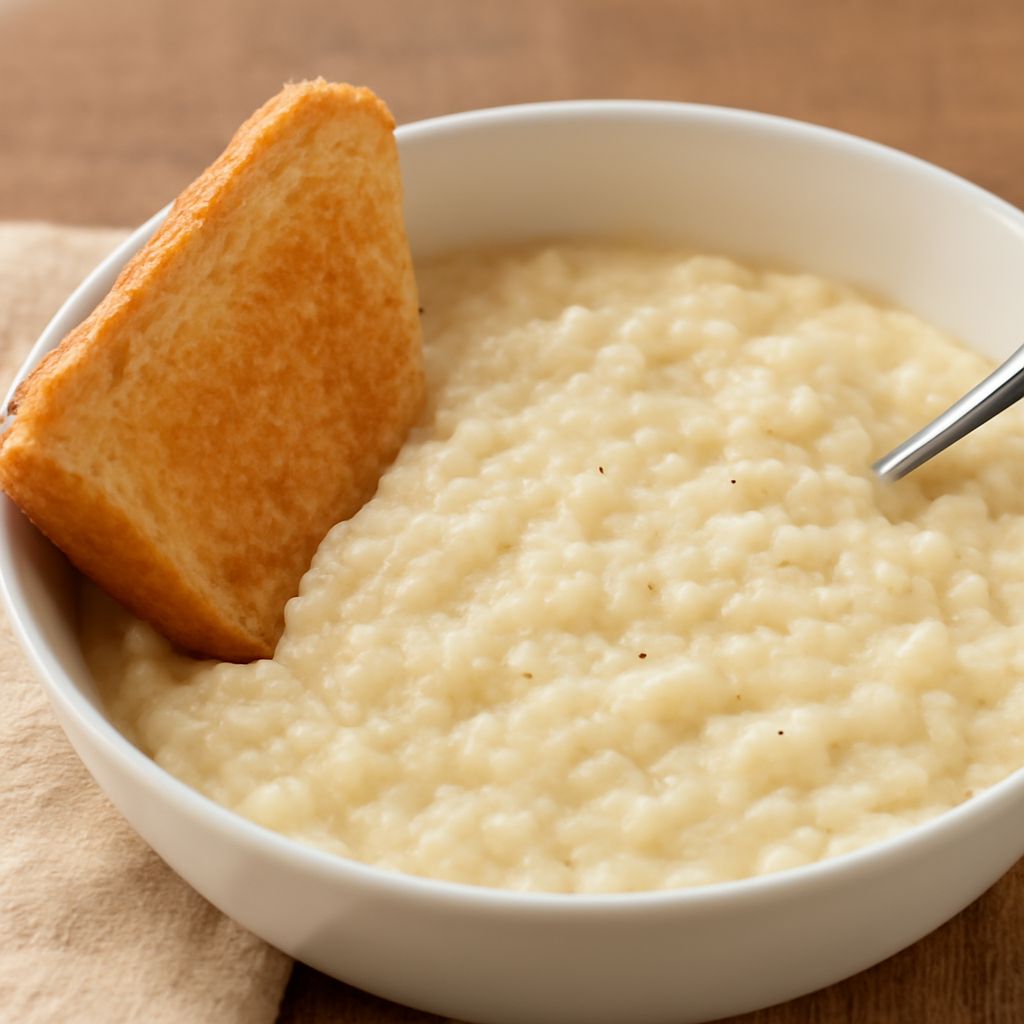
Bring water to a boil, whisk in quick grits, and lower the heat to a gentle simmer. In about 5 to 7 minutes, you can make a comforting pot with tender grains and enough body to hold a pat of butter. For other grinds, allow more time and follow the package directions.
The time grits need on the stove depends on their grind and processing. Give the corn enough liquid and attention, and you can make a bowl as loose or as substantial as you like. Here is a practical recipe, followed by the small adjustments that make it your own.
A simple pot of quick grits
This recipe makes four side-dish servings. It uses plain quick grits, the kind cooked on the stovetop, and follows the 1-to-4 grain-to-water ratio used in Quaker’s quick-grits directions. Check your own package: its recommended liquid and timing take precedence if they differ. Instant packets and coarse stone-ground products need their own directions.
Ingredients
- 1 cup plain quick grits
- 4 cups water, plus a little hot water if needed
- 1/4 teaspoon salt, or to taste
- 1 tablespoon butter, plus more for serving if desired
Method
- Pour the water into a medium, heavy-bottomed saucepan and bring it to a brisk boil over high heat. Add the salt.
- Slowly pour in the grits while whisking. Keep the stream steady and move the whisk around the pan so the grains disperse before they can clump.
- Reduce the heat to medium-low or as needed for a gentle simmer. Cover and cook the grits for 5 to 7 minutes, stirring occasionally and scraping across the bottom. Lift the lid carefully; thick grits can bubble and splatter.
- When thickened, taste a little after letting it cool. The grains should be tender, with no hard, raw center. If they need more time, continue gently, adding a splash of hot water if the pot becomes too thick.
- Take the pan off the heat and stir in the butter. Taste for salt. Spoon into warm bowls while the grits are soft and flowing; they will firm up as they stand.
How do you make grits for a larger table? Keep the same proportions for this particular quick product, use a roomy pot, and leave enough space for bubbling. The simmer may take longer to return after the grains go in, so begin checking texture once the mixture is cooking gently again. If using another package, scale its own directions instead.
How long to cook grits: read the grind
How long to cook grits depends on the product. For example, one manufacturer’s quick version takes 5 to 7 minutes, while its standard grits take 15 to 20 minutes. Those are examples, not a clock for every bag. Begin with the label, then taste for tenderness and adjust the liquid as needed.
Coarse stone-ground grits can take considerably longer. The larger pieces need time to absorb water and soften all the way through. Anson Mills’ coarse-grits method calls for a long, gentle simmer and additions of hot water as the mixture thickens. A thick pot is not automatically a finished pot: bite a cooled spoonful and look for a pleasant texture without a hard center.
If you are deciding how long to cook grits for breakfast, work backward from the package time and leave a few extra minutes for boiling water and finishing. Cooking grits for the right length of time at a slow simmer is easier to manage than a fierce boil, which can send hot corn bubbling out of the pan and concentrate the mixture before the grains soften.
The heat and batch size affect the result. Check how long the grits have cooked rather than walking away until the timer rings. If the grains are still firm when the liquid is nearly gone, add hot water a little at a time and keep simmering. This gives the corn a chance to finish without scorching on the bottom.
Choose the corn and the texture
Grits are coarsely ground corn made into a warm, spoonable dish. White and yellow grits offer a choice of color; the yellow kind brings a sunny appearance to the bowl. When preparing yellow grits, product labels also tell you about processing and grind, which matter more to the cooking method than color alone. Some grits are made from hominy, corn treated with an alkaline solution; follow the package directions for the particular product you buy.
Quick grits are convenient when the meal is close at hand. They cook quickly and yield a smooth, soft result. Stone-ground grits often have a more substantial texture and may require a longer cooking time than quick grits. Instant grits are a separate convenience product; use the directions on their packet rather than assuming the stovetop recipe above applies.
Wondering how to cook yellow grits? First identify whether the package says quick, regular, or stone-ground. Yellow corn does not make a single timing rule. For yellow quick grits, use the package’s proportions and simmer until tender; for a coarse grind, allow the longer time the mill recommends and have hot water ready.
Cooking yellow grits for a breakfast bowl can be as simple as adding butter and a pinch of salt. For dinner, give the bowl a savory finish with cheese and black pepper. Yellow grits cooked until tender can also carry a spoonful of greens or a little pan sauce. Choose a texture that suits the topping: loose enough to mingle with sauce, but substantial enough to support what sits on top.
How do you make grits taste like corn? When making grits, start with water and a modest amount of salt, then taste before adding rich ingredients. Butter rounds out the flavor without requiring a heavy hand. The corn flavor remains easy to notice, whether the bowl is pale or golden, smooth or a little rustic.
Make the liquid work for you
To prepare this corn as grits, four cups of water to one cup of dry grits gives the grains room to hydrate. Measure both with the same size cup. How long to cook grits and how much liquid they need vary by product. Other grinds and brands may call for a different proportion, and a longer simmer can require extra liquid to replace what evaporates. Keep a kettle or small pan of hot water nearby so an adjustment does not interrupt the simmer for long.
To make grits from corn that has already been milled for this dish, pour the grains gradually into the liquid and stir as they fall. Dumping the entire cup into one spot makes it harder to separate dry pockets. Making grits from ground corn calls for an even mixture. A whisk is helpful at the beginning; once the mixture thickens, a sturdy spoon can reach the bottom and corners of the pan.
To learn how to make grits from corn, start with corn labeled as grits for this recipe. Whole kernels, corn flour, and a random bag of cornmeal are not interchangeable measures here. Their particle size and preparation differ, so use a recipe and directions intended for the ingredient in hand.
Milk can add richness, while broth adds a savory note. If you experiment with either, pay close attention to heat and stir frequently; milk can scorch or boil over. Water is the straightforward choice for learning how the grains behave. Finish with a little milk or cream if you want a softer, richer bowl, warming it through gently.
To make grits, how much liquid should you add after cooking? Start with a tablespoon or two of hot water, stir thoroughly, and wait a moment before deciding on more. Thickening continues off the heat. For a firmer serving, simmer a little longer while stirring; for a softer one, add liquid gradually. Either way, taste the grains before deciding the dish is ready.
Stirring, seasoning, and serving
A heavy pan spreads heat more evenly, but it still needs your attention. Stir across the bottom and into the edges, especially as the mixture thickens. If you feel anything catching, lower the heat and stir more often. A scorch can make the whole pot taste bitter, so move early rather than scraping up a browned layer later.
Salt the cooking water lightly, then adjust at the end. Cheese, broth, and salty toppings can change the final balance. If adding shredded cheddar, remove the pan from the heat first and stir in a small handful at a time until melted. Butter adds sheen; scallions and pepper add a fresh accent.
How do you make grits into a meal? Try them alongside eggs, sautéed greens, or beans. For a sweet preparation of grits, use a modest pinch of salt in the pot and add fruit, a drizzle of honey, or brown sugar at the table. Let everyone season their own bowl; the plain base is accommodating.
For shrimp and grits, spoon the warm grits into shallow bowls and top with shrimp sautéed in a little oil or butter, garlic, and a squeeze of lemon. Cook the shrimp until the flesh is pearly or white and opaque, as FoodSafety.gov advises. Spoon any pan juices over the top. If the topping is ready before the corn, keep it warm safely and serve promptly.
Save and reheat leftovers
Divide leftovers into shallow containers and refrigerate at 40°F or below within two hours of cooking, or within one hour if the food has been exposed to temperatures above 90°F. Use refrigerated leftovers within four days, or freeze them for longer storage. These are the FoodSafety.gov guidelines for cooked leftovers.
Cold grits set quite firm. Break them into a saucepan, add a splash of water or milk, and warm gently, stirring to loosen them. Reheat leftovers to 165°F, checking with a food thermometer. Add more liquid as necessary, then taste and adjust the seasoning. If shrimp was stored with the grits, reheat the whole portion to the same temperature.
Before serving, drag a spoon through the pot: the trail should slowly fill in for a soft bowl, or hold briefly for a firmer one. If it stands too stiffly, stir in hot water a little at a time. Taste once more for tenderness, allowing your chosen grind the time it needs to soften.