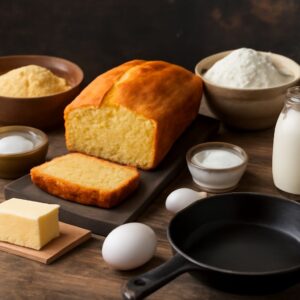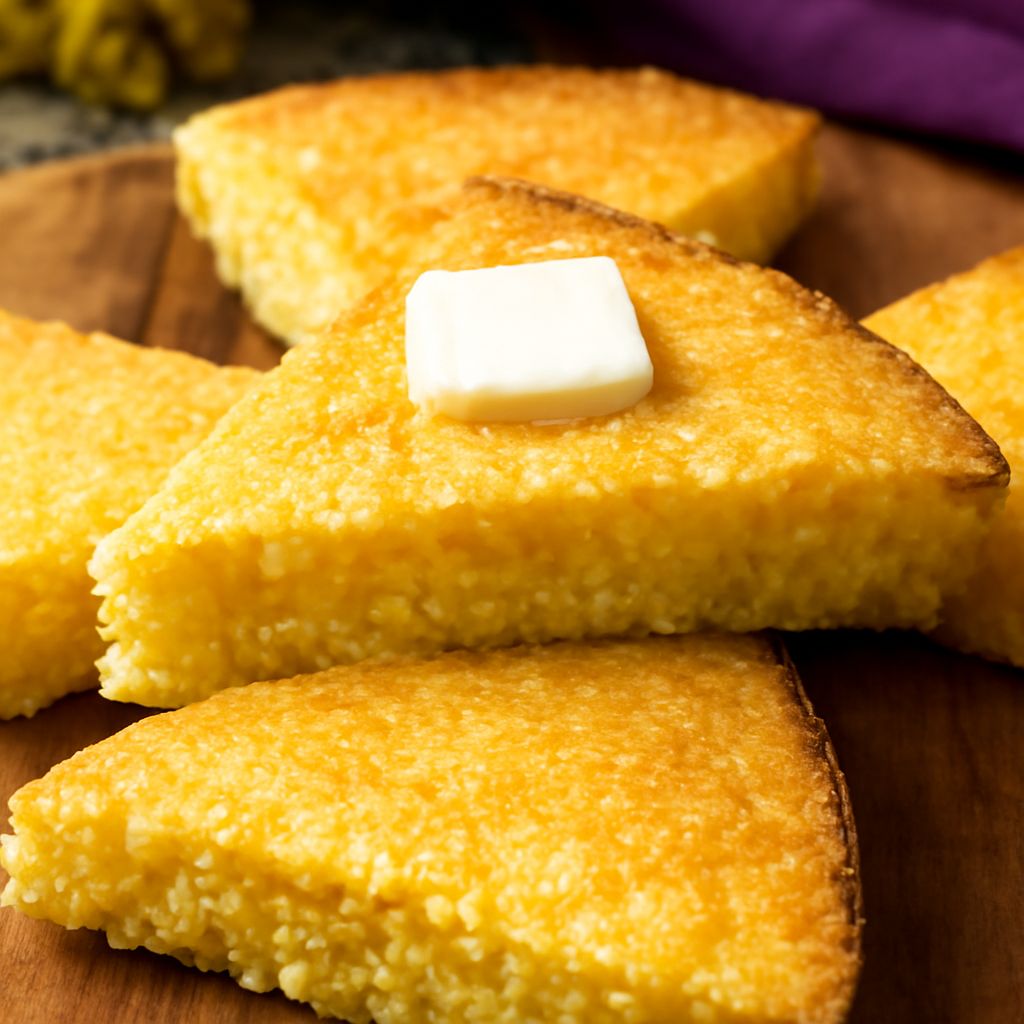
A golden crust and a tender, corn-studded middle make this skillet a welcome companion to a pot of beans. This recipe for cornbread with creamed corn gives you slices that hold together while staying pleasingly soft; the can brings both sweet kernels and moisture to the batter.
For this tender skillet bread, the trick is to give the center enough time to set without waiting for it to become dry. The scratch method below makes eight generous wedges, and a separate boxed-mix option comes later for a quicker pan.
Cornbread, Creamed Corn, and the Batter: How They Work Together
For cornbread, creamed corn adds sweetness and texture. Creamed corn, often labeled cream-style corn, is a mixture of kernels and the creamy liquid from processed corn. It usually contains no dairy, although ingredients vary by brand. That thick liquid is part of the recipe, so pour in the whole can rather than draining it. Regular canned kernels do not contribute the same moisture or texture.
In a cornbread recipe with creamed corn, the extra liquid softens the crumb and the kernels give each bite a little pop. It also means the batter will look thicker and lumpier than pancake batter. A moist cornbread recipe with creamed corn needs a visual test as well as a timer: the middle should be set, even though a few damp crumbs may cling to a tester.
Use a plain, medium-grind yellow cornmeal, not a self-rising cornmeal mix. The measured baking powder and salt below are designed for plain cornmeal. If your pantry contains only a self-rising product, its added ingredients can change the result; save it for a recipe written for that mix.
Scratch Skillet Cornbread
This cornbread recipe with creamed corn uses a 10-inch oven-safe cast-iron skillet. An 8-inch square metal baking pan is a good alternative; both give the batter enough room to bake through. The edges will be somewhat crisper in the preheated skillet. Serve eight wedges or nine squares.
Prep: 15 minutes
Bake: 25 to 35 minutes
Rest: 10 to 15 minutes
Ingredients
- 1 cup plain yellow cornmeal
- 1 cup all-purpose flour
- 1 tablespoon baking powder
- 3/4 teaspoon fine salt
- 1 to 2 tablespoons sugar, to taste
- 2 large eggs
- 1 can (14.75 to 15 ounces) cream-style corn, undrained
- 1/2 cup buttermilk
- 4 tablespoons unsalted butter, melted and slightly cooled, plus 1 tablespoon for the pan
Directions
- Heat the oven to 400°F with a rack in the middle. Put a 10-inch cast-iron skillet in the oven while it heats. If using an 8-inch square metal pan, grease it with the tablespoon of butter and set it aside at room temperature.
- Whisk the cornmeal, flour, baking powder, salt, and sugar together in a large bowl. Break up any lumps of baking powder so the bread rises evenly. Use one tablespoon of sugar for a lightly sweet loaf or two for a sweeter one.
- In another bowl, beat the eggs, then stir in the undrained corn, buttermilk, and 4 tablespoons melted butter. The butter should be warm rather than hot when it meets the eggs.
- Pour the wet mixture into the dry ingredients. Fold with a spatula just until no dry flour remains. A few small lumps are fine; vigorous mixing can make the finished bread tough. The mixture should be thick but spreadable, with visible kernels throughout.
- Carefully remove the hot skillet using oven mitts. Add the remaining tablespoon of butter and swirl to coat the bottom and sides. Scrape in the batter and spread it to the edges. For the greased square pan, simply spread in the batter. Return the pan to the oven promptly.
- Bake for 25 to 35 minutes, beginning to check at 25. The top should be golden, the edges pulling slightly from the pan, and the center set rather than rippling when the pan is gently nudged. A toothpick inserted into the bread portion near the center should come out without wet batter; a few moist crumbs are welcome. If you hit a kernel, test another spot.
- Rest in the pan for 10 to 15 minutes. Run a thin spatula around the edge, cut, and serve warm. For this moist cornbread, the short rest lets the soft crumb settle so the pieces lift out more cleanly.
For cornbread, creamed corn keeps the crumb soft after baking. A heavy skillet holds heat well, which helps form that appealing crust. Remember that its handle stays hot long after it leaves the oven: keep an oven mitt nearby. If the top browns before the center sets, lay a piece of foil loosely over it and continue baking, checking every few minutes.
Read the Batter and the Center
Baking time changes with the pan, the oven, and even the temperature of the ingredients. A dark pan can brown the bottom sooner; a glass dish may bake differently, so use the suggested metal pan for the most predictable timing. Set the pan on the middle rack where heat can circulate around it.
A moist skillet loaf should produce a tender interior, not a wet stripe of uncooked batter. If the toothpick comes out coated, return the pan to the oven for several minutes and test again. Wait until the center springs back lightly when touched and no longer looks glossy or sunken. This tender cornbread benefits from a short rest. Avoid cutting into it immediately, since the tender crumb needs a moment to firm up.
For a cornbread recipe using creamed corn, the amount of liquid matters. Measure the buttermilk rather than adding it by eye, and include the full can of corn in its sauce. If you use a different size can, measure about 1 3/4 cups of the contents for this batter. Too much additional liquid can leave the center heavy and slow to set.
A Separate Boxed-Mix Method
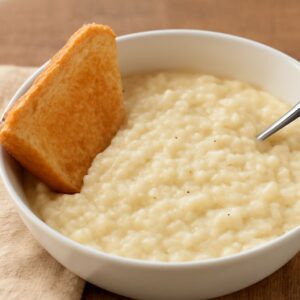
You can make cornbread mix with creamed corn when time is short, but treat it as a separate formula. The boxed-mix version has its own liquid balance. Mixes already contain flour, leavening, salt, and often sugar, so they do not replace the dry ingredients cup for cup in the scratch version. This option makes a softer spoon bread, which is best served with a spoon rather than cut into neat wedges.
For the boxed version, use one 8.5-ounce package Jiffy Corn Muffin Mix, one 8.25-ounce can cream-style corn, one 8.75-ounce can whole-kernel corn drained, 1 cup sour cream, 2 eggs, and 1/2 cup melted butter. Heat the oven to 375°F and grease a 2-quart casserole dish. Beat the eggs, stir in the corn, sour cream, and butter, then fold in the dry mix. Spread in the dish and bake for 45 to 50 minutes, until lightly browned and firm in the center. Rest for 10 minutes before serving. This follows the proportions and method of Jiffy’s spoon bread casserole; ovens and dishes vary, so use the center as your guide.
When combining cornbread mix with creamed corn, don’t also add the milk called for on the box to this casserole formula. The corn and sour cream supply moisture. A recipe using the mix should specify the package size. For another brand or package size, follow a recipe developed for that product rather than assuming its mix has the same proportions. This mix-based cornbread makes a richer, softer side than the scratch wedges above. The spoonable boxed version is especially easy to serve alongside a main dish.
Flavor It and Bring It to the Table
For a savory pan, fold 1/2 cup shredded sharp cheddar and two tablespoons chopped scallions into the scratch batter. Or add one small seeded, finely chopped jalapeño for gentle heat. Keep additions modest so the batter still bakes evenly. A spoonful of honey butter at the table is lovely if you prefer to leave the bread itself less sweet.
This skillet cornbread is at home beside black-eyed peas, braised greens, or a bowl of chili. Its soft crumb can catch the savory juices, while the browned edge adds a little contrast. Cut small squares for a large spread, or serve generous wedges with a simple soup for supper.
Store and Reheat
Put leftovers in a covered shallow container and refrigerate within two hours of baking, or within one hour if the food is exposed to temperatures above 90°F. Keep the refrigerator at 40°F or colder, use the bread within four days, or freeze portions for longer storage. These limits follow FoodSafety.gov’s leftover guidance.
Wrap individual pieces for the freezer so you can take out only what you need. To reheat, cover loosely and warm in the oven or microwave until the center reaches 165°F on a food thermometer. A little butter at serving brings back richness. Whether you slice the skillet or spoon out the casserole, look for a set center and serve it warm alongside something saucy.