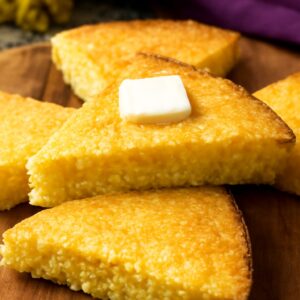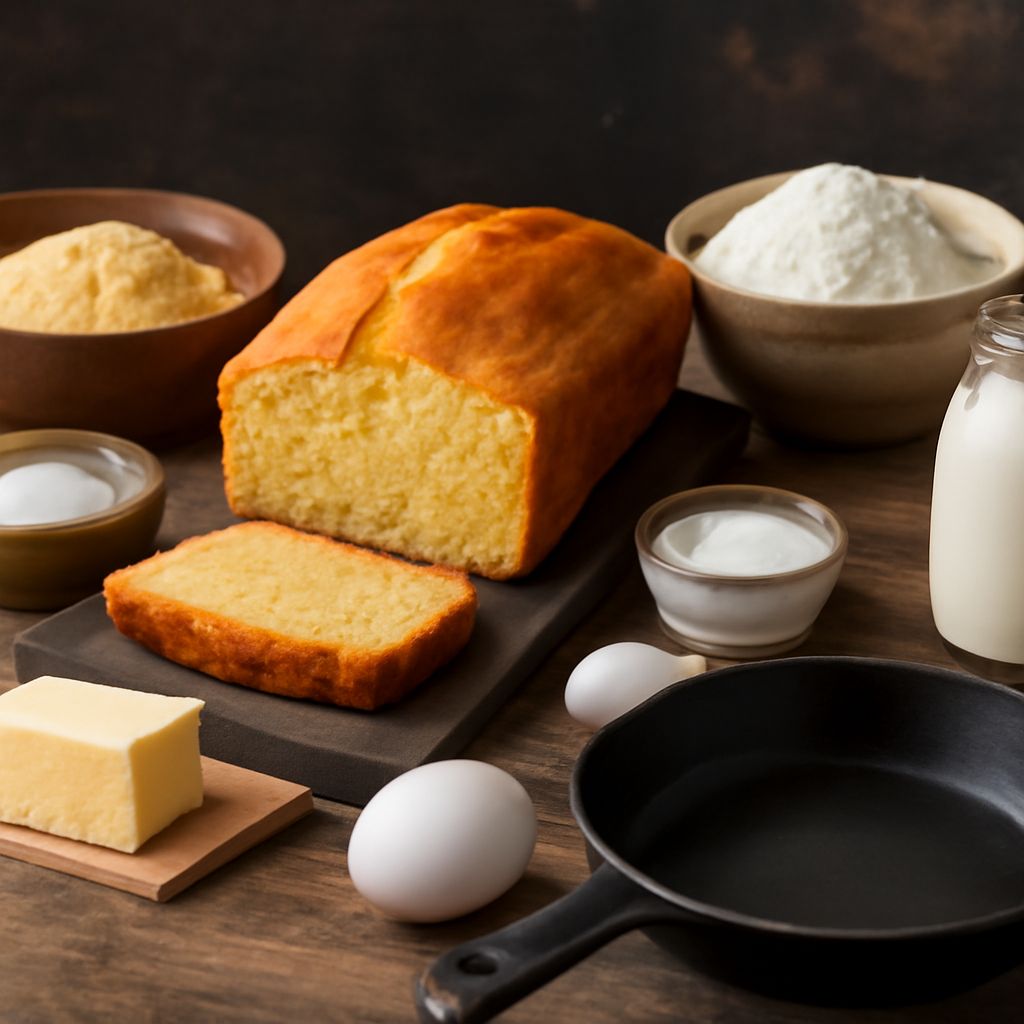
A cup of ordinary milk can turn cornmeal into a warm, golden bread with crisp edges and a tender middle. This recipe for cornbread made with no buttermilk uses baking powder for lift, so there is no need for a special trip to the store. The result is lovely beside a pot of beans or with a little butter melting into a warm slice.
Cornbread takes many forms across the South and beyond: some cooks prefer it savory and coarse, others softer or a touch sweet. This version gives you room to choose. Make it in a skillet for a browned crust or in a square pan for easy slices, and use plain milk or the measured tangy substitute below.
Cornbread Recipe Without Buttermilk: Ingredients and Method
This cornbread without buttermilk makes one 8-inch square pan or one 9-inch oven-safe skillet, about 9 servings. Allow about 15 minutes to prepare it, 20 to 25 minutes to bake, and 10 minutes to cool before cutting. You will need two mixing bowls, a whisk, a spatula, a measuring cup and spoons, and a toothpick.
Ingredients
- 1 cup yellow cornmeal, preferably fine or medium grind
- 1 cup all-purpose flour
- 1 tablespoon baking powder
- 1/2 teaspoon fine salt
- 2 tablespoons granulated sugar, optional
- 1 cup whole milk, or the acidified milk mixture described below
- 2 large eggs
- 1/4 cup unsalted butter, melted and cooled slightly
- 1 tablespoon neutral oil or softened butter for the pan
Use plain cornmeal rather than self-rising cornmeal mix, which already contains leavening and salt. Spoon flour into the measuring cup and level it rather than packing it down. If your cornmeal is very coarse, the finished bread will have a more pronounced grain and may feel less tender.
Directions
- Heat the oven to 400°F. Grease an 8-inch square metal baking pan with the oil or softened butter. For a skillet, see the preheating directions below.
- In a large bowl, whisk the cornmeal, flour, baking powder, salt, and optional sugar until evenly combined. Break up any small lumps of baking powder.
- In a second bowl, whisk the milk and eggs until blended. Whisk in the melted butter; it should be warm, not hot enough to cook the eggs.
- Pour the wet ingredients into the dry ingredients. Fold gently with a spatula just until no dry pockets remain. A few small lumps are welcome. The batter should be thick but pourable.
- Spread the batter evenly in the prepared pan. Bake for 20 to 25 minutes, beginning to check at 20 minutes. The top should be golden, the center should spring back lightly, and a toothpick inserted in the center should come out clean or with a few moist crumbs rather than wet batter.
- Set the pan on a rack for 10 minutes. Run a thin spatula around the edge, then cut into squares or wedges and serve warm.
In this skillet cornbread recipe, no buttermilk is needed for a pleasing rise: baking powder contains the ingredients needed to create lift when moistened and heated. Once the wet and dry mixtures meet, get the pan into the oven promptly. Long stirring develops the flour and can make the crumb tougher, so fold with a light hand.
Plain milk or a tangy substitute?
Plain milk gives the bread a mild, sweet dairy flavor that lets the cornmeal come forward. The crumb is tender and the optional sugar makes it slightly sweeter. Use the full cup listed above; this recipe with plain milk needs no extra acid or baking soda to work.
To give a cornbread recipe without buttermilk a sharper flavor, put 1 tablespoon of lemon juice or white vinegar in a liquid measuring cup, then add enough milk to reach the 1-cup line. Stir and let stand for 5 to 10 minutes before adding it to the eggs. This measured mixture replaces the cup of plain milk; it is not a cup of milk plus another tablespoon of liquid. The University of Maine Cooperative Extension describes the same substitution and resting period.
The acidified mixture can look slightly curdled, which is expected. It adds a gentle tang, though it will not have the same thickness or cultured flavor as commercial buttermilk. Either choice makes a satisfying loaf; the difference here is mostly flavor, with a possible small change in tenderness. Keep the baking powder amount the same for both versions.
If you want cornbread without buttermilk because the carton is empty, plain milk is the shortest route. If you enjoy a little acidity with a rich stew, take the extra few minutes to mix the substitute. Whole milk adds richness; lower-fat milk will also work, with a somewhat leaner taste. Both choices contain dairy.
A skillet or a square pan
A skillet cornbread recipe without buttermilk gives you the pleasure of a deeply golden bottom and crisp edges. Use a 9-inch cast-iron skillet or another skillet rated for the oven at 400°F. Put the empty skillet in the oven while it heats. When you are ready to bake, carefully remove it with thick oven mitts, add the tablespoon of oil or butter, and swirl to coat the bottom and sides. Add the batter immediately and return it to the oven.
The skillet version with ordinary milk develops a crisp edge as the fat sizzles under the batter. Keep the handle turned away from the edge of the counter and remember that it remains extremely hot after baking. Check at 20 minutes and use the same center and toothpick cues. Different skillets hold heat differently, so a few additional minutes may be needed.
For a softer edge and tidy squares, choose the metal baking pan. Grease it without preheating and spread the batter into the corners. A glass or ceramic dish may bake differently, so begin checking early and follow the dish manufacturer’s temperature guidance. An 8-inch pan keeps the batter deep enough for a tender center; a much larger pan will make a thinner bread that can finish sooner.
For this skillet cornbread recipe, no buttermilk is required to achieve a crisp rim and a tender center. Pull it out as soon as the middle is baked through, rather than waiting for the entire top to become dark brown. If you like more crust on each piece, cut wedges after the short rest and serve them with the browned side facing up.
Getting the texture right
If the center is wet but the edges are browning quickly, loosely tent the top with foil and give the bread a few more minutes. Insert the toothpick into the center again, away from the edge of the pan. Moist crumbs are fine; a streak of raw batter means it needs longer. An oven thermometer can help if the bread repeatedly bakes much faster or slower than expected.
If this buttermilk-free cornbread turns out dry, measure the flour lightly and check earlier next time. Cornmeal absorbs liquid as it sits, so avoid mixing the batter far ahead of baking. Too much time in the oven can dry even a well-mixed batter. The ten-minute rest helps the crumb settle so slices hold together, though some crumbs are part of cornbread’s charm.
For savory corn bread made without cultured buttermilk, leave out the sugar and offer softened butter at the table. For a lightly sweet loaf, use the two tablespoons in the ingredient list. Neither style needs to be defended: cornbread belongs to many family tables, and the right slice is the one that suits the meal in front of you.
Serving and storing
Serve cornbread without buttermilk with greens, chili, soup, or a bowl of beans. Split a wedge and add butter, or spoon a little honey over it if you like a sweet contrast. It is sturdy enough to catch the juices from a slow-cooked dish, yet tender enough to enjoy on its own.
Let leftovers cool, then wrap them well or place them in a covered container. For longer keeping, freeze individual portions in a freezer-safe bag, pressing out excess air. Thaw a piece in the refrigerator or reheat it from frozen until hot; a covered oven-safe dish helps protect it from drying. A little butter added at serving can bring back richness.
For tomorrow’s lunch, save a square to warm alongside your beans; for tonight, serve the bread while the edge still has its fresh-baked crunch.