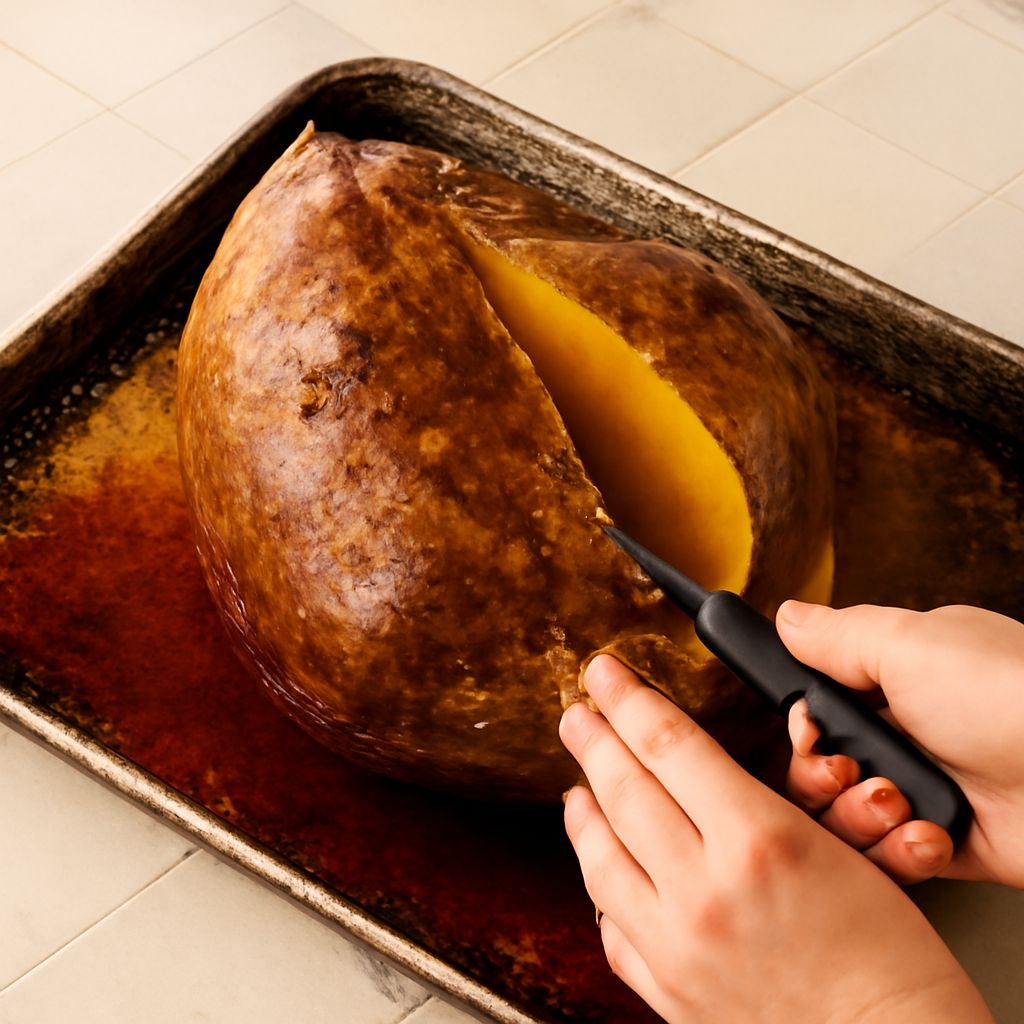
Heat the oven to 425°F and give a sturdy piece of Hubbard squash enough room on a sheet pan to brown. For an easy blue Hubbard side, this method turns its dense orange flesh tender inside and caramelized at the edges, with a savory finish that belongs beside a good pot of greens.
The basic formula works for other Hubbard squash, too. Start with a manageable section, roast it skin-on, and lift the flesh from the tough rind at the table. You get a generous side dish and a simple foundation for the other dishes below.
Blue Hubbard Squash Recipes: Start With a Good Piece
Blue Hubbard has a blue-gray, often bumpy rind and deep orange flesh. It can grow very large, so a market may sell sections rather than a whole squash. A cut piece makes this recipe much more approachable: choose firm flesh with no slimy areas or mold, and keep it refrigerated until you cook it. A whole squash should feel heavy for its size and have a hard, intact rind.
For this blue Hubbard squash recipe, buy a 3-pound skin-on section, weighed before removing the seeds. That should give you about 2 pounds of cleaned wedges and approximately 4 to 6 side-dish servings; the exact yield depends on the cavity and thickness of the rind. A section of blue Hubbard is especially convenient when the market has already cut a large one. Choose a piece that fits comfortably on your board and has enough flat surface to rest securely while you work. A smaller blue Hubbard can be handled in the same way, but a large whole one may be more than your knife and board can safely manage. Ask the produce counter to cut it into sections if necessary.
Many blue Hubbard squash recipes call for peeling and cubing the flesh. Other blue Hubbard squash recipes use halves, but wedges expose more flesh to the heat. Wedges save that difficult peeling step, and their broad surfaces have room to take on color. When roasting these Hubbard wedges, the size of the pieces matters more than a strict minute count: thick wedges need longer for the centers to soften.
Cut It Safely and Remove the Seeds
Wash your hands, then rinse the rind under running water and scrub it with a clean produce brush. Dry it well so it is easier to grip. University of Minnesota Extension recommends washing squash before cutting; the knife passes through the outside on its way to the flesh.
Set a large cutting board on a damp towel so it will not slide. Place the section cut-side down, with the broadest flat surface against the board. Use a large, sharp chef’s knife, keep your fingers away from the blade, and cut into roughly 1-inch-thick wedges. Work slowly and keep the squash stable. If the blade sticks or the piece rocks, stop and ask the produce counter for smaller sections rather than forcing the knife. Never hold a rolling squash in the air while cutting it.
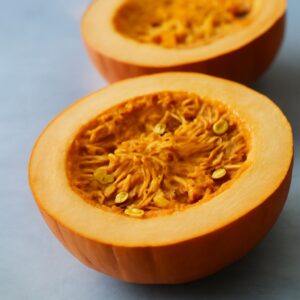
Scoop out the seeds and stringy fibers with a sturdy spoon. You can discard them or save the seeds for a separate preparation. Leave the hard rind on while roasting; it helps the wedges hold their shape. This recipe for Hubbard squash measures the cleaned wedges so that the oil and seasoning coat the flesh evenly. If your section yields less than 2 pounds, scale the seasoning down accordingly.
Roasted Wedges With Garlic and Smoked Paprika
This is the dependable center of the meal: sweet, earthy flesh with browned edges, a little smoke, and enough acidity at the end to wake everything up. The method gives roasted Hubbard squash recipes a practical starting point for weeknights or a holiday spread.
Yield: 4 to 6 side servings
Prep time: about 20 minutes
Cook time: 35 to 50 minutes
Ingredients
- One 3-pound section Hubbard squash, yielding about 2 pounds seeded, skin-on wedges
- 2 tablespoons olive oil
- 3/4 teaspoon kosher salt, plus more to taste
- 1/2 teaspoon smoked paprika
- 1/4 teaspoon freshly ground black pepper
- 2 garlic cloves, finely grated or minced
- 1 tablespoon lemon juice or apple cider vinegar
- 1 tablespoon chopped fresh parsley, optional
Method
- Heat the oven to 425°F. Put a rack in the middle and line a large rimmed sheet pan with parchment if you like easier cleanup. Prepare the squash as described above, cutting even wedges about 1 inch thick.
- In a large bowl, toss the wedges with the oil, salt, paprika, and pepper. Rub the seasoning over the exposed flesh. Arrange in a single layer with a little space between the pieces and a cut side against the pan. Use two pans if the wedges are crowded; rotate them between oven racks halfway through cooking.
- Roast for 25 minutes. Turn each wedge carefully with a thin spatula. Mix the garlic with a teaspoon of oil from the pan or a few drops of fresh oil, then brush it over the exposed flesh. Adding it partway through keeps the small pieces from spending the whole roast in the hottest pan.
- Roast another 10 to 25 minutes, until a fork or the tip of a knife slides easily through the thickest flesh and the edges have browned. Timing varies with thickness and moisture. If the edges darken before the middle softens, loosely cover the pan with foil and continue cooking.
- Transfer to a platter, drizzle with lemon juice, and scatter parsley over the top. Taste a piece and add salt if needed. Serve warm, leaving the rind on each wedge for diners to work around.
The roasted Hubbard can have different textures depending on the cut: a narrow wedge browns faster, while a thick one stays especially soft inside. The pan should sizzle gently rather than fill with steam. Crowding traps moisture and softens the surfaces; a little space gives the edges a better chance to brown. A dark metal pan may color the undersides faster than a light one, so take a look when you turn the wedges. If they are deeply browned already, finish with the paler side down.
Ways to Change the Flavor
Once you know how the flesh behaves, these Hubbard wedges can follow the rest of your menu. Keep the oil, salt, oven temperature, and tenderness test from the main method, and choose one of these finishes:
- Maple and pecan: Replace the paprika and garlic with 1/2 teaspoon cinnamon. Brush the wedges with 1 tablespoon maple syrup during the last 10 minutes, then add 2 tablespoons toasted chopped pecans. A pinch of salt keeps the finish balanced.
- Cajun-inspired: Use 1 teaspoon salt-free Cajun seasoning in place of the paprika, with the salt in the recipe. Finish with lemon and sliced scallions. If your seasoning contains salt, reduce the added salt and taste at the end.
- Brown butter and sage: Omit the paprika and garlic. Warm 1 tablespoon butter in a small skillet until it smells nutty and the milk solids turn golden; add a few torn sage leaves briefly, then spoon over the cooked wedges. Watch the butter closely because it can go from golden to burned quickly.
These variations also work beautifully with blue Hubbard. Roasting the blue variety brings out its sweetness, so the finish can take either a sweet or savory direction. The maple version is lovely beside roast pork; the savory versions settle happily next to beans, cornbread, or chicken. For a meatless plate, add black-eyed peas and a sharp, vinegary slaw. Their bright crunch is a welcome partner for the soft squash.
Make the Most of the Leftovers
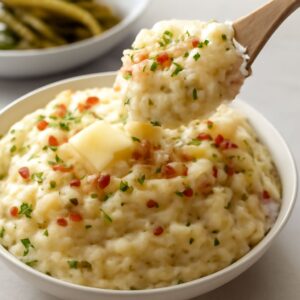
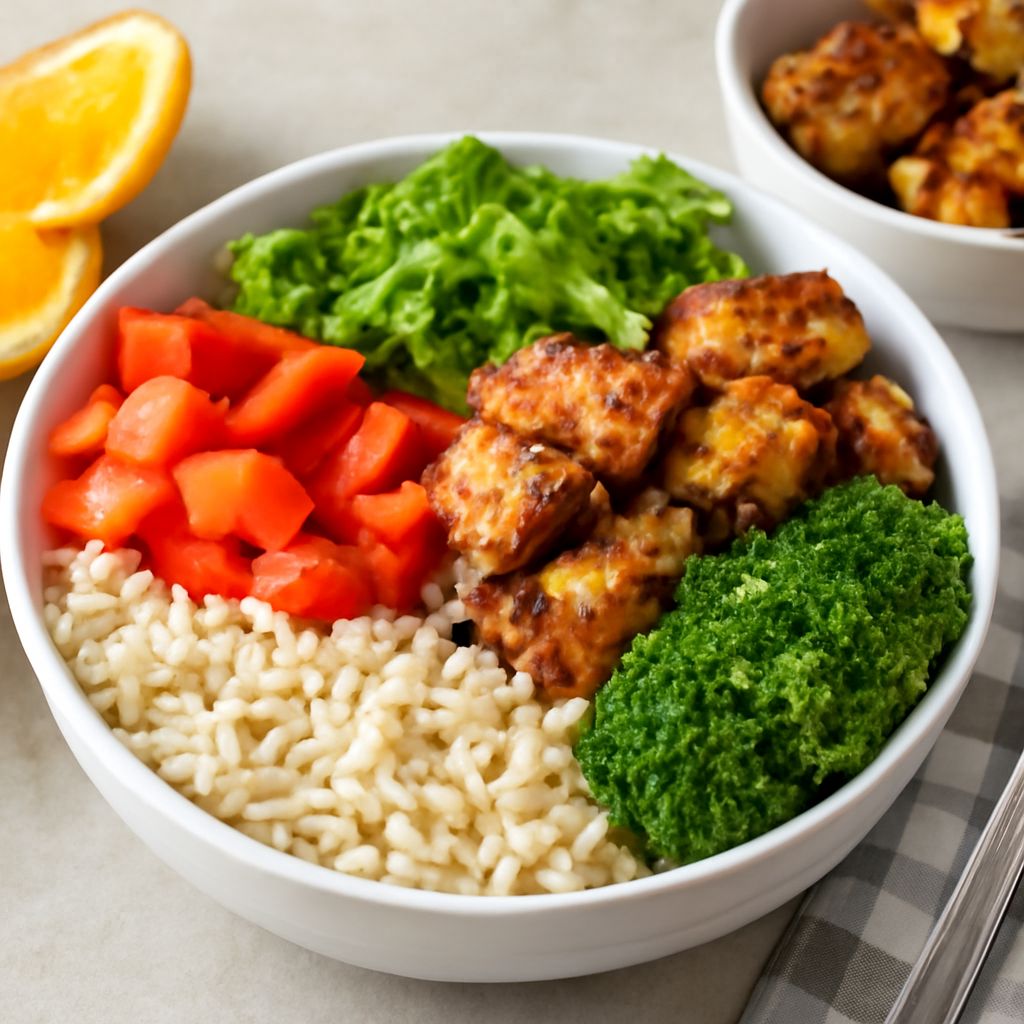
Let the wedges cool just enough to handle, then scoop the flesh from the rind. Mash it with a little butter and a spoonful of warm broth for a silky side, or fold chunks into cooked rice with sautéed onions. For another Hubbard squash dish, fold the flesh into a warm grain bowl with beans and greens. For soup, blend the flesh with warm vegetable or chicken broth, adding liquid gradually until it reaches the consistency you like. Taste before adding more salt, since the squash is already seasoned.
Refrigerate leftovers in shallow containers within 2 hours of cooking, or within 1 hour if the temperature is above 90°F. Use them within 4 days, or freeze portions for later. Reheat leftovers to 165°F, as advised by FoodSafety.gov. A splash of broth helps mashed squash loosen as it warms.
A large blue Hubbard can feed more people than expected, especially when you start with a large section. Weigh the cleaned wedges and cook in batches if needed; give each batch its own space on the pan. The flesh is ready for the platter when a fork slips easily through the thickest wedge. Add the bright finishing squeeze and bring it to the table.