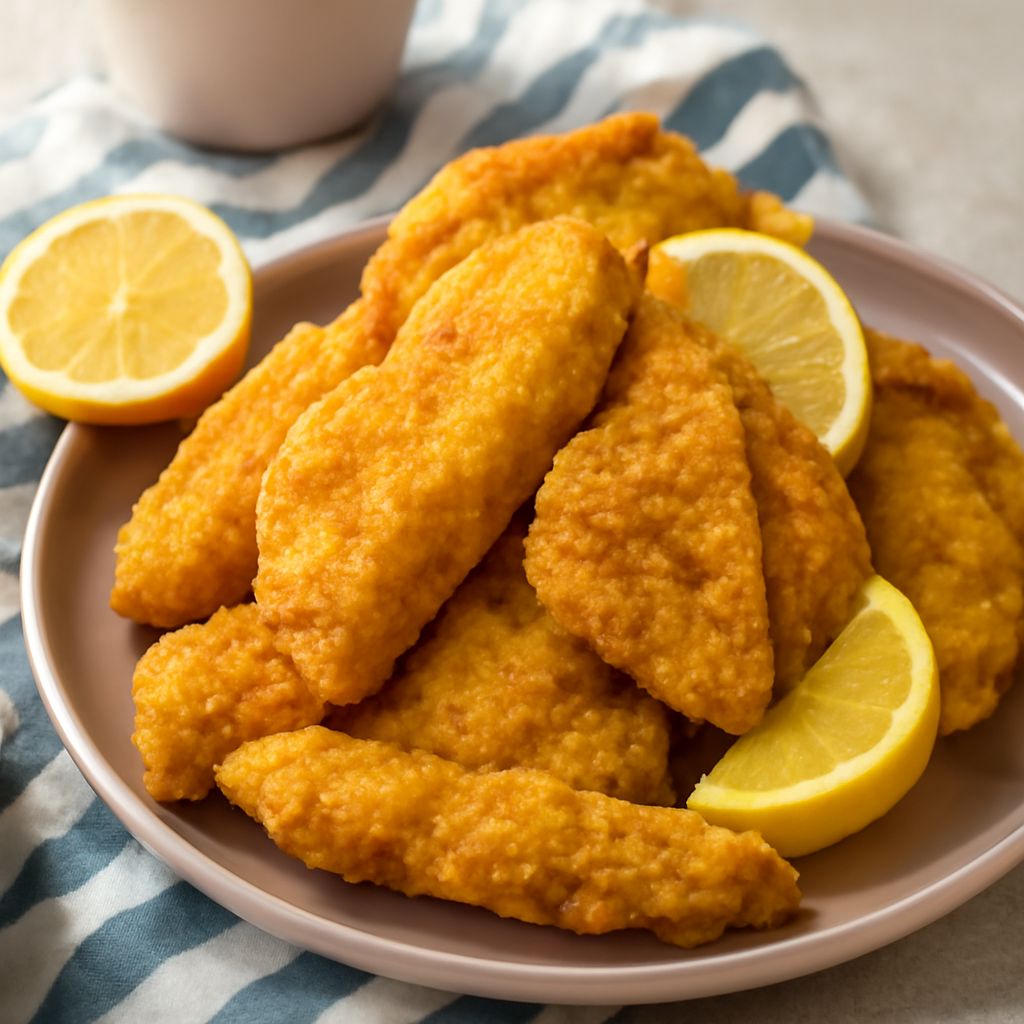
A golden cornmeal crust and tender, flaky fish are within reach at home. This Southern recipe for fried catfish uses a seasoned coating, a steady oil temperature, and small batches to bring a satisfying crunch to the table.
You need no elaborate equipment to make this fried catfish recipe: a deep, heavy pot, a thermometer for the oil, and a separate food thermometer will do the work. Set everything out first for orderly frying.
Southern fried catfish recipe: ingredients and method
This recipe serves four. Use four boneless catfish fillets, each about 6 ounces and 1/2 to 3/4 inch thick. Check each piece individually; thicker pieces may need longer.
Ingredients
- 4 boneless catfish fillets, about 1 1/2 pounds total
- 1 cup buttermilk
- 3/4 cup fine or medium yellow cornmeal
- 1/4 cup all-purpose flour
- 1 teaspoon kosher salt, plus more to taste
- 1 teaspoon paprika
- 1/2 teaspoon garlic powder
- 1/4 teaspoon cayenne pepper, or less to taste
- 1/4 teaspoon ground black pepper
- About 6 cups neutral frying oil, such as canola, or enough for 2 inches in the pot
- Lemon wedges, for serving
Method
- Pat the fillets dry with paper towels. Pour the buttermilk into a shallow dish and turn the fish in it. Refrigerate for 15 minutes while you prepare the coating and equipment.
- In another shallow dish, mix the cornmeal, flour, salt, paprika, garlic powder, cayenne, and black pepper. Set a wire rack over a rimmed baking sheet for the cooked fish. Have a clean platter and tongs ready.
- To fry the catfish in deep oil, pour the oil into a heavy pot, leaving at least 3 inches of empty space above the oil. Heat over medium to medium-high heat to 350°F, checking with a deep-fry thermometer. Adjust the burner to keep the temperature near 350°F.
- Lift a fillet from the buttermilk, allowing excess to drip off. Coat both sides in the cornmeal mixture, pressing gently so it adheres. Shake off loose coating. Repeat with the remaining fish and place it on a clean plate.
- Lower two fillets carefully into the oil, one at a time, away from you. Fry for about 4 to 6 minutes, turning gently if needed for even browning. The exact time depends on thickness and oil temperature. Remove a piece to a clean plate and insert a food thermometer into the thickest part: it must reach 145°F. Return it to the oil briefly if necessary and check again with a cleaned thermometer.
- Transfer the cooked fillets to the rack to drain. Bring the oil back to 350°F before frying the next batch, and check each piece for doneness. Serve promptly with lemon wedges and your favorite sides.
Never fill the pot more than halfway. If two pieces crowd it, fry one at a time. Keep a lid handy for an oil fire; never pour water onto burning oil.
What makes the coating crisp?
Many fried catfish recipes begin with cornmeal because its little grains give the crust a pleasant crunch. Flour helps make an even coating. This Southern-style catfish preparation uses buttermilk to give the dry mixture something to cling to; letting the excess drip away keeps the layer from becoming heavy and wet.
For the best catfish crust, dry the fillets before the buttermilk bath: it removes surface moisture and helps the coating go on evenly. Press the meal on gently, then shake off the surplus. Loose crumbs in the oil can brown quickly, so lift out stray pieces with a slotted utensil between batches if needed.
For this Southern fried catfish recipe, keep the oil near 350°F. A deep-fry thermometer measures the oil, while a food thermometer checks the fish. USDA notes that deep-frying oil is usually kept between 350°F and 375°F; this recipe uses the lower end. Add fish carefully and let the oil recover between batches, since cold fillets lower its temperature.
In Southern fried catfish recipes, a crowded pot makes it difficult to turn and remove pieces cleanly. Catfish fried in deep oil needs space so the oil reaches the sides of each fillet. Once the fish is done, a rack lets excess oil drain and air reach the underside. Piling hot fillets on a plate traps steam against that lovely crust.
Check the fish, not just the crust
Even the best fried catfish recipe needs a doneness check. For the best result with catfish, account for thickness: a crust can look golden before the center has finished cooking, so measure the fish rather than judging by color alone. The USDA guidance for fish calls for 145°F measured with a food thermometer.
Take the fillet out of the oil before checking it. Insert the probe into the thickest part, approaching from the side if that helps position the tip in the center. Avoid touching the plate with the probe. Check every fillet, especially when pieces are different sizes, and wash the thermometer with hot, soapy water after contact with undercooked fish.
The suggested frying time is a guide to when to start checking; it cannot establish the temperature inside the fish. If a piece reads below 145°F, return it to the oil, give it a little more time, and measure again. The finished flesh should be opaque and separate easily, but the thermometer gives you the number to act on.
Fix a coating that slips or turns soft
A good Southern-style catfish coating starts with dry fillets. If the coating slides away before cooking, let more buttermilk drip off the next piece and press the dry mixture over the entire surface. Handle the coated fillet gently when lowering it into the pot. A thick blanket of damp meal is more likely to break than a thin, even layer.
If the crust softens after frying, look at where the fish rests. Drain on a wire rack and serve promptly. The same idea helps when making deep fried catfish for a group: arrange cooked pieces in a single layer as you finish the batches. Deep-frying the catfish in small batches also makes it easier to handle.
For the best catfish texture, check the oil thermometer and lower the heat if the coating browns too fast. If it is pale and heavy, check that the oil has returned to temperature before the next batch, and avoid adding too much fish at once. In either case, check the center with the food thermometer; neither the crust nor the oil reading tells you whether the fish has reached 145°F.
Other fried catfish recipes can be adjusted without losing their cornmeal character. For a milder Southern-style catfish crust, leave out the cayenne; for more warmth, add a little more. Fine cornmeal makes a more delicate coating, while medium cornmeal gives a more noticeable grain. Mix the seasonings thoroughly for an even Southern-style catfish coating.
Serve it while it crackles
A Southern fried catfish recipe sits happily beside coleslaw, collard greens, or a spoonful of creamy grits. Lemon cuts through the richness, and a small dish of tartar sauce gives everyone the choice of a creamy dip. Add cornbread and sliced tomatoes.
If you are choosing the best fried catfish recipe for a gathering, consider timing as well as seasoning. Mix the coating and set the table before heating the oil. When you deep-fry catfish, work in batches close to serving, then bring the fillets to the table on a rack-lined platter.
For deep fried catfish with a lighter seasoning, use the same cornmeal mixture with less cayenne and pass hot sauce at the table. A pinch of extra salt can go on the hot crust, but taste first: the coating already contains salt. Keep sauces on the side until serving so the surface stays crisp.
Store and reheat safely
Keep raw fish separate from ready-to-eat food, and use clean plates and utensils for the finished fillets. Wash hands and surfaces after handling raw seafood. The FDA recommends refrigerating seafood promptly and thawing frozen fish in the refrigerator overnight; sealed fish can also be thawed in cold water or in the microwave if cooked immediately afterward.
Refrigerate leftovers in shallow containers within two hours, or within one hour when exposed to temperatures above 90°F. Keep the refrigerator at 40°F or below and eat cooked fish within three to four days. Reheat leftovers to 165°F, as recommended by FoodSafety.gov. An oven or air fryer can help restore some crispness; use a thermometer to check the reheated center.
For the best crunch in this fried catfish recipe, have everything ready before the oil heats. For a crisp finish, leave room between fillets and drain them on a rack; before serving, check the thickest part of each piece for 145°F.