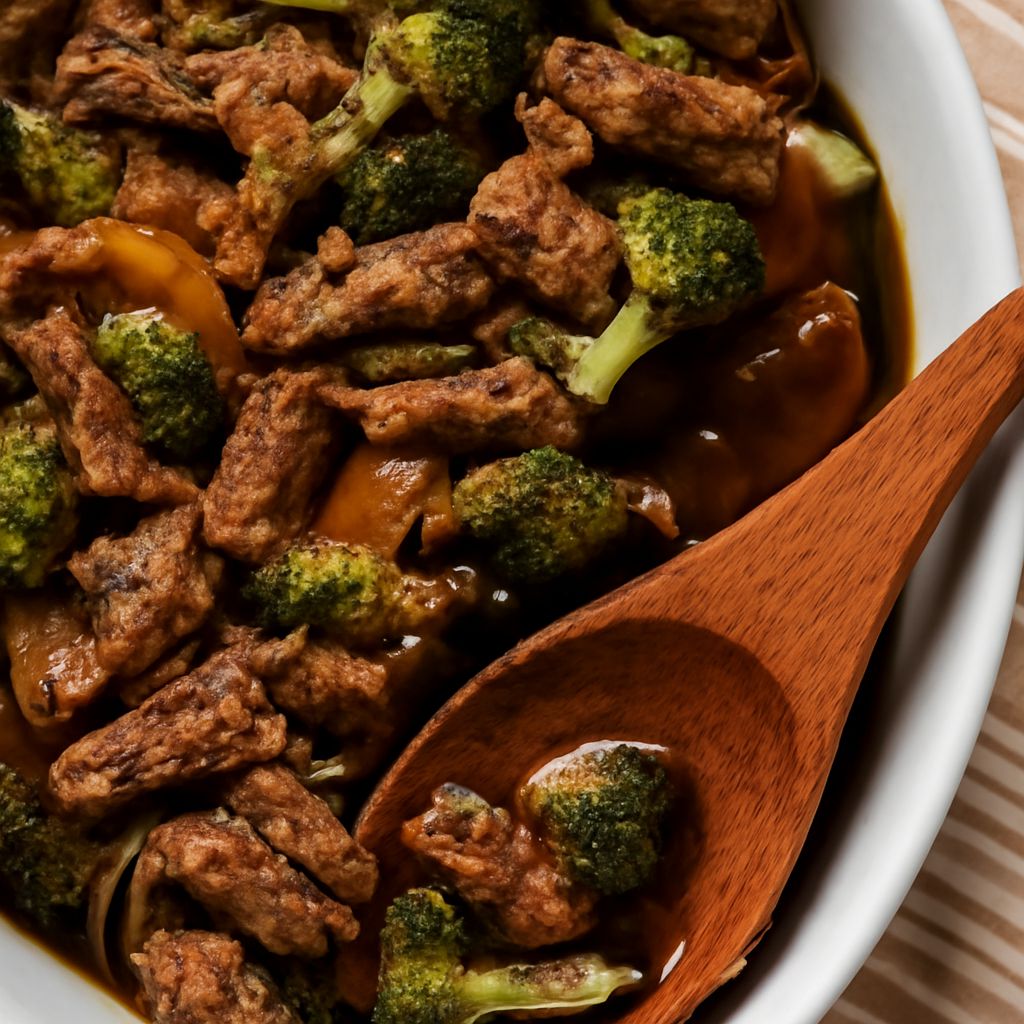
Start the beef in a savory sauce and save the broccoli for the end. This beef and broccoli cooked in a slow cooker gives the meat time to become tender while the florets stay bright and pleasantly firm. Serve over rice.
Beef and Broccoli Slow Cooker Basics
This slow cooker beef and broccoli makes about four servings in a 4- to 6-quart slow cooker. Plan on roughly 6 to 8 hours on low for the beef, followed by 20 to 30 minutes on high for the broccoli and sauce. Cookers vary, and the cut and thickness of the meat matter, so begin checking the beef at the early end of the range. The beef and broccoli cooked slowly is ready when the meat pulls apart easily with a fork, while the florets should still have a little bite.
A beef and broccoli slow cooker recipe works best when each ingredient gets the time it needs. Beef chuck benefits from a long, gentle cook; broccoli does not. The sauce starts thin enough to surround the meat, then gets thickened at the end so it clings to each piece instead of disappearing into the rice.
Ingredients
For the beef and sauce:
- 1½ pounds boneless beef chuck roast, trimmed of excess exterior fat and cut into roughly 1-inch pieces
- ½ cup reduced-sodium soy sauce
- ¾ cup unsalted or low-sodium beef broth
- 2 tablespoons packed brown sugar
- 3 garlic cloves, minced
- 1 tablespoon grated fresh ginger
- 1 teaspoon toasted sesame oil
- 2 tablespoons cornstarch
- 2 tablespoons cold water
For finishing and serving:
- 1 pound broccoli, cut into medium florets, about 5 cups
- 3 cups cooked rice, or more for serving
- Sliced scallions and sesame seeds, optional
Use a slow cooker large enough for the ingredients without exceeding the manufacturer’s maximum fill line. Reduced-sodium soy sauce gives you more control over salt; broth labeled unsalted helps further. Taste the finished sauce before adding salt, because the soy sauce already brings plenty of seasoning.
Make It Step by Step
- Prepare the beef. Pat the thawed chuck dry and cut it into even pieces. Trim hard excess fat, leaving some marbling for flavor. Keep the meat refrigerated until it goes into the cooker. Wash hands, utensils and surfaces after contact with raw beef.
- Mix the sauce. Stir the soy sauce, broth, brown sugar, garlic, ginger and sesame oil together in the cooker. Add the beef and turn the pieces to coat them. The liquid will not necessarily cover every piece; spread the meat in an even layer.
- Cook until tender. Cover and cook on low for 6 to 8 hours. Start checking at 6 hours. A fork should slide into a piece easily and separate the fibers without a struggle. If the meat is still firm, cover and continue cooking, checking again as needed.
- Thicken the sauce. Stir the cornstarch and cold water together until smooth. Turn the cooker to high and stir the mixture into the hot liquid. Add the broccoli, cover and cook for 20 to 30 minutes, until the sauce has thickened and the florets are tender but not mushy. Stir once if needed to coat the broccoli, then check both the vegetables and sauce.
- Serve. Taste the sauce and adjust with a little water if it is too salty or concentrated. Spoon the beef, broccoli and sauce over hot cooked rice. Finish with scallions or sesame seeds if you like.
A beef and broccoli crock pot recipe should give the starch time to heat through after it is added. The liquid needs to become hot enough to thicken; if the sauce is still thin, leave the lid on and continue on high, checking in short intervals. If the broccoli is ready first, lift it out with a slotted spoon and return it when the sauce is finished. That extra minute of attention keeps a good vegetable from becoming a very soft one.
Choose the Beef and Cut It Evenly
Chuck contains connective tissue that softens with extended cooking. Choose a piece with some marbling and trim thick exterior fat.
Cut the pieces to a similar size so they cook at a similar pace. Very thin slices may become dry or break apart before the sauce is ready.
This beef and broccoli crockpot recipe is forgiving about the exact shape of the pieces, but tenderness is a better guide than the clock. A fork-tender piece yields easily; a chewy piece may simply need more time. Keep the lid closed between checks, since repeated lifting lets heat escape and can lengthen the cook.
Thaw frozen beef in the refrigerator before it goes into the cooker. USDA advises thawing meat before slow cooking. Do not use the appliance’s warm setting to cook raw meat; use low or high as directed by the manufacturer. A clean food thermometer offers a safety check, while the fork test tells you whether the chuck has become tender enough to enjoy.
Give the Broccoli a Shorter Cook
The difference between crisp-tender broccoli and a soft, olive-colored floret can be a matter of minutes. Cut the florets to a consistent medium size, leaving a little stem attached so they hold together. Add them only after the beef is tender and the cooker has been turned to high. Start checking at 20 minutes; the timing varies with floret size, how much heat escapes and the cooker itself.
For a recipe of beef and broccoli in a slow cooker, fresh florets give you a straightforward way to judge texture. Frozen broccoli can work, but its size and prior processing vary; add it near the end and check early. If the cooker takes longer than expected to heat the vegetables, continue until they are hot and tender. Alternatively, steam broccoli separately and fold it into the thickened sauce just before serving.
Make the Sauce Your Own
The soy sauce supplies salt and savory depth; brown sugar rounds its edge. Garlic and ginger add warmth without requiring a separate pan. The sesame oil is a finishing flavor in a small quantity, so toasted oil is enough to make its presence known. Taste before making adjustments, especially if your broth contains salt.
If the sauce tastes too strong, stir in a splash of water or unsalted broth. If it tastes too mild, a little more soy sauce can sharpen it. A small amount of vinegar added at the end brings a brighter note; add it gradually and taste. For heat, serve chili flakes or chili crisp at the table, letting each person decide how much to use.
Cornstarch must be mixed with cold water first. Sprinkle dry starch straight into hot liquid and it can form lumps before it disperses. For a thicker sauce, mix a little more starch with cold water, add it gradually and heat again. In a crockpot recipe for beef and broccoli, a sauce that is too thick can be loosened with broth or water. The goal is a glossy coating that settles around the rice, not a paste that holds a spoon upright.
Serve, Store and Reheat
For beef and broccoli in the crockpot, cook rice separately according to its package directions while the vegetables finish. White rice makes a mild base; brown rice adds a nuttier flavor and generally needs more time. Divide rice among bowls, add beef and broccoli, and spoon sauce over each serving. Cucumber or a simple crunchy salad on the side adds a cool contrast to the warm bowl.
A beef and broccoli recipe slow cooker owners can prepare ahead still needs prompt cooling after dinner. Divide leftovers into shallow containers and refrigerate within two hours, or within one hour if the surrounding temperature is above 90°F. USDA recommends using refrigerated leftovers within 3 to 4 days; see its leftover guidance. Store rice and the beef mixture in separate shallow containers if that makes reheating easier.
Reheat leftovers on the stove or in the microwave to 165°F, checking with a food thermometer. USDA does not recommend reheating leftovers in a slow cooker. Add a splash of water if the sauce has thickened in the refrigerator, and heat evenly. Broccoli will be softer the second day, so keep it separate if a firmer texture is especially important.
Troubleshooting Before Dinner
If slow cooker broccoli beef is tender but the sauce is thin, remove the broccoli and let the cornstarch mixture heat on high a little longer. If the sauce thickens unevenly, stir gently and check for lumps. Stirring a smooth slurry before adding it is easier than chasing little pockets of starch afterward.
If slow cooker beef broccoli seems dry, check whether the meat was cut very small or cooked beyond the tender stage. A little warm broth stirred into the sauce can help the pieces feel moist, though it cannot reverse overcooking. For the next batch, use larger, evenly sized pieces and begin checking earlier.
For beef broccoli crock pot cooking, a chewy piece is the more likely trouble: the chuck may need longer to soften. If it resists a fork, cover the cooker and continue cooking, then check again before adding the broccoli.