For one cup of brown sugar, reach for one cup of white granulated sugar and molasses: add 2 teaspoons for light brown or 1 tablespoon for dark. This brown sugar replacement brings back the molasses flavor and moisture, so the mixing bowl can stay on the counter. If molasses is missing too, there are other ingredients you can use in its place, with a few changes to expect.
What can I use instead of brown sugar in a recipe?
White sugar plus molasses is the closest everyday substitute for brown sugar in baking. King Arthur Baking gives these amounts for each cup of brown sugar in a recipe:
| Recipe calls for | Use instead |
|---|---|
| 1 cup light brown sugar | 1 cup white granulated sugar plus 2 teaspoons molasses |
| 1 cup dark brown sugar | 1 cup white granulated sugar plus 1 tablespoon molasses |
You can mix the molasses into the sugar with a fork until evenly distributed, or add both to the recipe at the same stage the brown sugar would have entered. Scrape the molasses spoon well. No other liquid adjustment is needed for this particular combination in King Arthur’s method.
For example, a batch of cookies calls for 1 cup packed light brown sugar. Measure 1 cup of granulated sugar and 2 teaspoons of molasses, then cream them with the butter as directed. If the same recipe calls for dark, use the tablespoon amount instead. A sub for brown sugar can go straight into the bowl; there is no need to wait for the mixture to dry.
Understand the packed cup
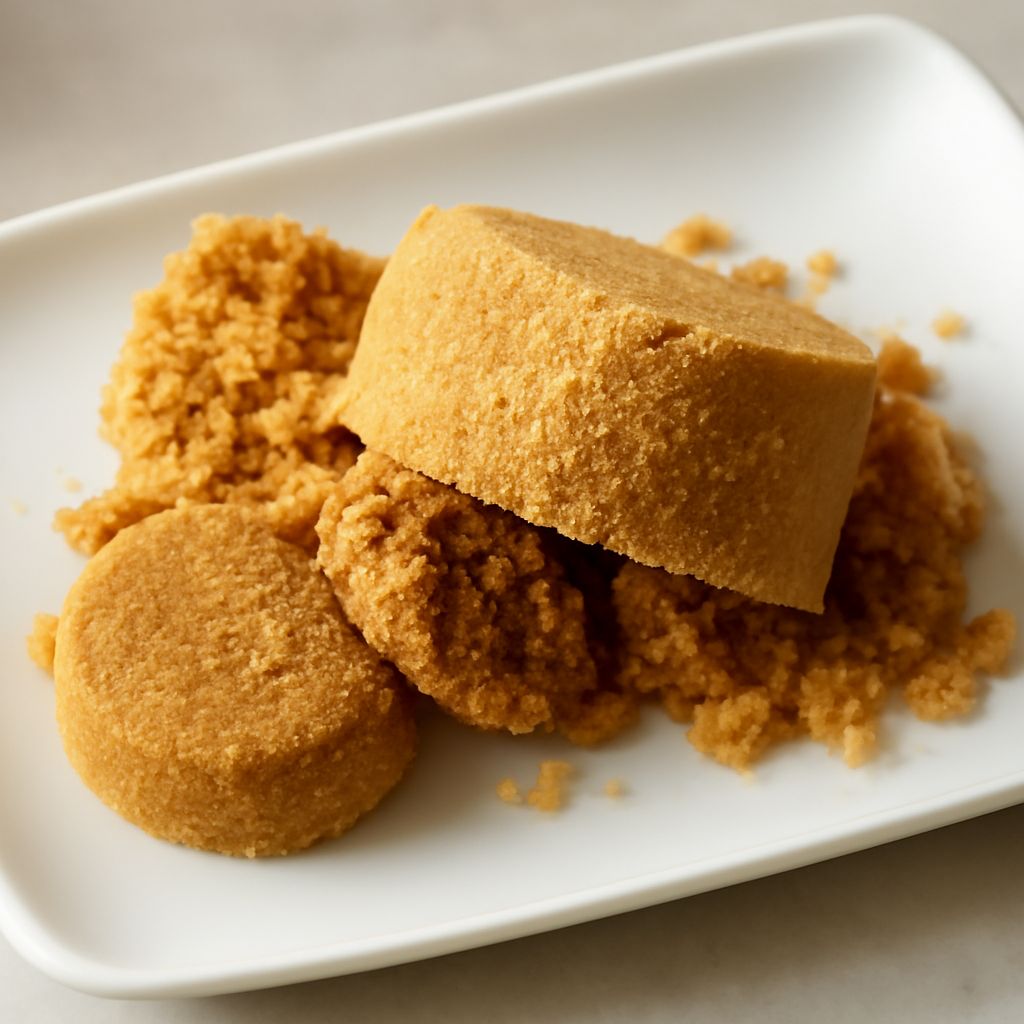
Brown sugar holds its shape when pressed into a measuring cup because it contains molasses. “Packed” means pressing it into the cup and leveling the top, rather than sprinkling it loosely and leaving air pockets. Granulated sugar, by contrast, is measured level without packing.
If the recipe gives weights, a scale is a helpful way to reproduce its intended amount. King Arthur’s example uses 198 grams of white sugar plus 14 grams of molasses for the light version, close to its reference weight of 213 grams for a cup of brown sugar. This is a practical replacement, not an instruction to pack the white sugar. Measure the molasses separately; a tablespoon and a teaspoon are not interchangeable.
Brown sugar adds more than sweetness. Molasses contributes color, flavor, moisture, and some acidity. That acidity can interact with baking soda, while sugar also affects how a dough spreads and a cake rises. A replacement for dark brown sugar with molasses keeps those characteristics closer to the original than white sugar alone.
When white sugar is all you have
What can I use instead of brown sugar if there is no molasses? White granulated sugar can stand in by volume: use 1 level cup for 1 cup packed brown sugar. It supplies sweetness, but the molasses flavor and darker color will be missing. Do not add a random spoonful of water to imitate brown sugar; water does not supply the same flavor or chemistry.
In cookies, the result may be paler and the spread can change in either direction depending on the recipe. In cakes and muffins, the rise or crumb may also differ. King Arthur found the outcome varied with the other ingredients and mixing method. The batch can still be worth baking, especially if you welcome a lighter flavor, but a familiar cookie may not have its usual chew.
For a replacement for dark brown sugar in a spice cake, white sugar will leave the batter less deeply flavored. Cinnamon or ginger already called for in the recipe will still contribute their own character; they do not replace the missing molasses. Use the original baking temperature and begin checking for doneness when the recipe says to, since color alone will be less informative.
Use another brown sugar or a similar cane sugar
What to use instead of brown sugar when the pantry contains the other shade? Light and dark brown sugar can be exchanged cup for cup. Pack either one as directed. Dark gives a deeper molasses note; light makes a milder replacement for dark brown sugar. In a gingerbread, that change is easier to notice than it may be in a chocolate-heavy batter.
Muscovado is another moist cane sugar with a strong molasses character. King Arthur recommends it as a brown sugar replacement by weight. If a recipe calls for 213 grams of packed brown sugar, weigh 213 grams of muscovado. Break up lumps before mixing so a dark pocket of sugar does not become the surprise center of one cookie.
Turbinado and demerara are drier, often coarser sugars. Their crystals may not dissolve or cream in the same way, leaving a different texture. King Arthur suggests choosing a fine-grained raw sugar if using one in place of brown; a coarse sugar is more predictable sprinkled on top than hidden in a delicate cake batter.
What about honey or maple syrup?
What can I use instead of brown sugar if the only sweetener is liquid? Honey and maple syrup can sweeten a batter, but they bring extra liquid and act differently from the sugar crystals in a creamed dough. They are a more substantial experiment than the molasses mixture, particularly in cookies or a butter cake that depends on creaming.
For a tested starting method in recipes with added liquid, King Arthur’s liquid-sweetener guide suggests a generous 3/4 cup honey for 1 cup sugar, or 1 cup maple syrup for 1 cup sugar, and reducing other liquid by about 3 to 4 tablespoons per cup of liquid sweetener. These are general sugar-swap guidelines, not a guarantee for every brown-sugar recipe. If there is not enough milk or other added liquid to reduce, the balance is harder to preserve; a recipe developed for that sweetener is a better choice.
Honey and maple have their own flavors and can make baked goods softer and moister. Honey also browns readily; King Arthur recommends avoiding it in recipes baked above 350°F. For a replacement for dark brown sugar in a cookie dough with no added liquid, the white-sugar-and-molasses route is the more direct choice.
Choose for the job in the bowl
A sub for brown sugar should match the task as well as the sweetness. For a chewy cookie or a molasses-forward cake, use the white sugar mixture or another moist brown sugar if available. For a crumb topping, a coarse cane sugar may add a pleasant crunch. For a liquid sweetener, choose a batter with liquid to adjust and expect a different finish.
The substitute for dark brown sugar is easiest to judge before the flour goes in: look for an even mixture and no sticky molasses streaks. If the dough has already become unusually wet after a liquid swap, do not keep adding sweetener. Follow a recipe designed for that liquid on the next batch, or bake a small test portion first and see how it spreads.